Prediabetes - A Risk Factor NOT a Disease, A Yellow Signal NOT a Red Alarm
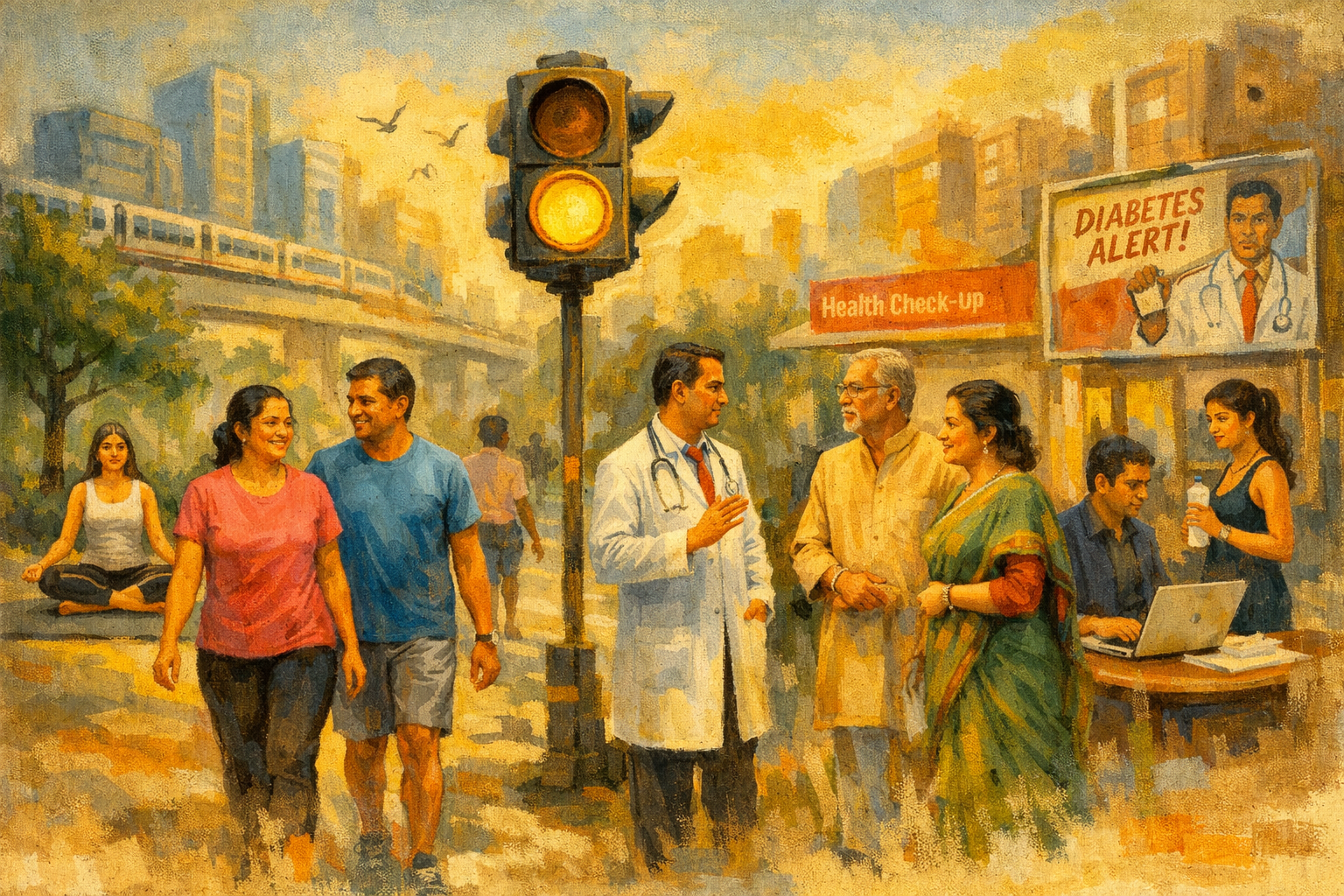
Prediabetes is not a disease or a red alarm. It is a risk factor, a yellow signal that tells us to be more careful about the way we lead our lives in general, over the age of 50.
The Book
 Bhavin Jankharia
The Detailed 15-Point Guide to Live Long, Healthy
Bhavin Jankharia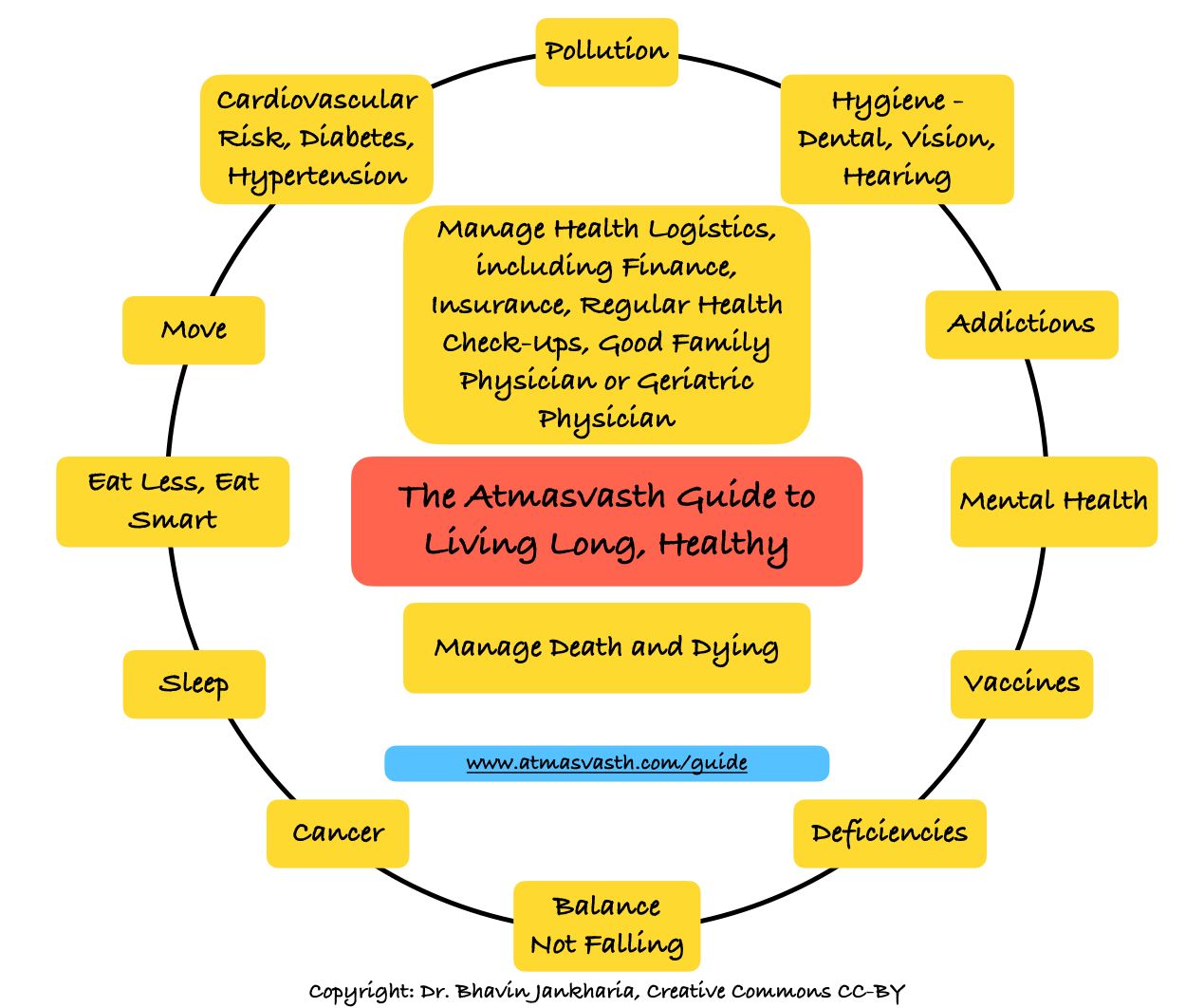
Audio
Soundcloud
YouTube
A YouTube version of the audio is also now available here.
Text
This piece has been prompted by the monetary, physical and psychological trauma, a friend of mine with prediabetes went through after connecting with a social media influencer claiming to be an expert on prediabetes and diabetes reversal.
Let’s start with a simple statement. Prediabetes is NOT a disease, it is a potential risk factor. Type 2 diabetes IS a disease. Type 2 diabetes definitely needs treatment, prediabetes usually DOES NOT.
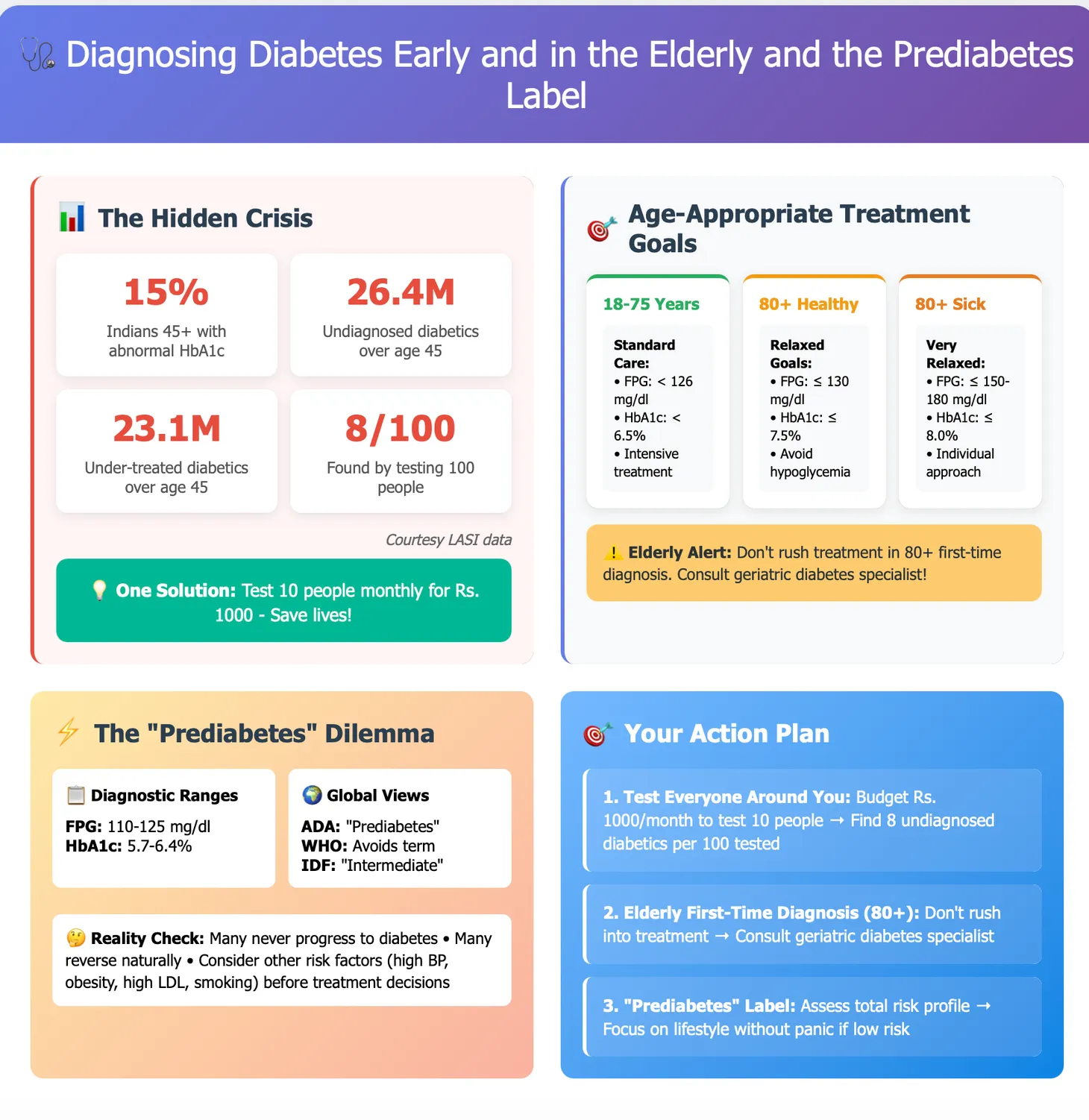
I first addressed this issue briefly in my piece titled “Diagnosing Diabetes Early and in the Elderly and the Prediabetes Label” in Jul 2025. A recent paper has led me to readdress this issue.
 Bhavin Jankharia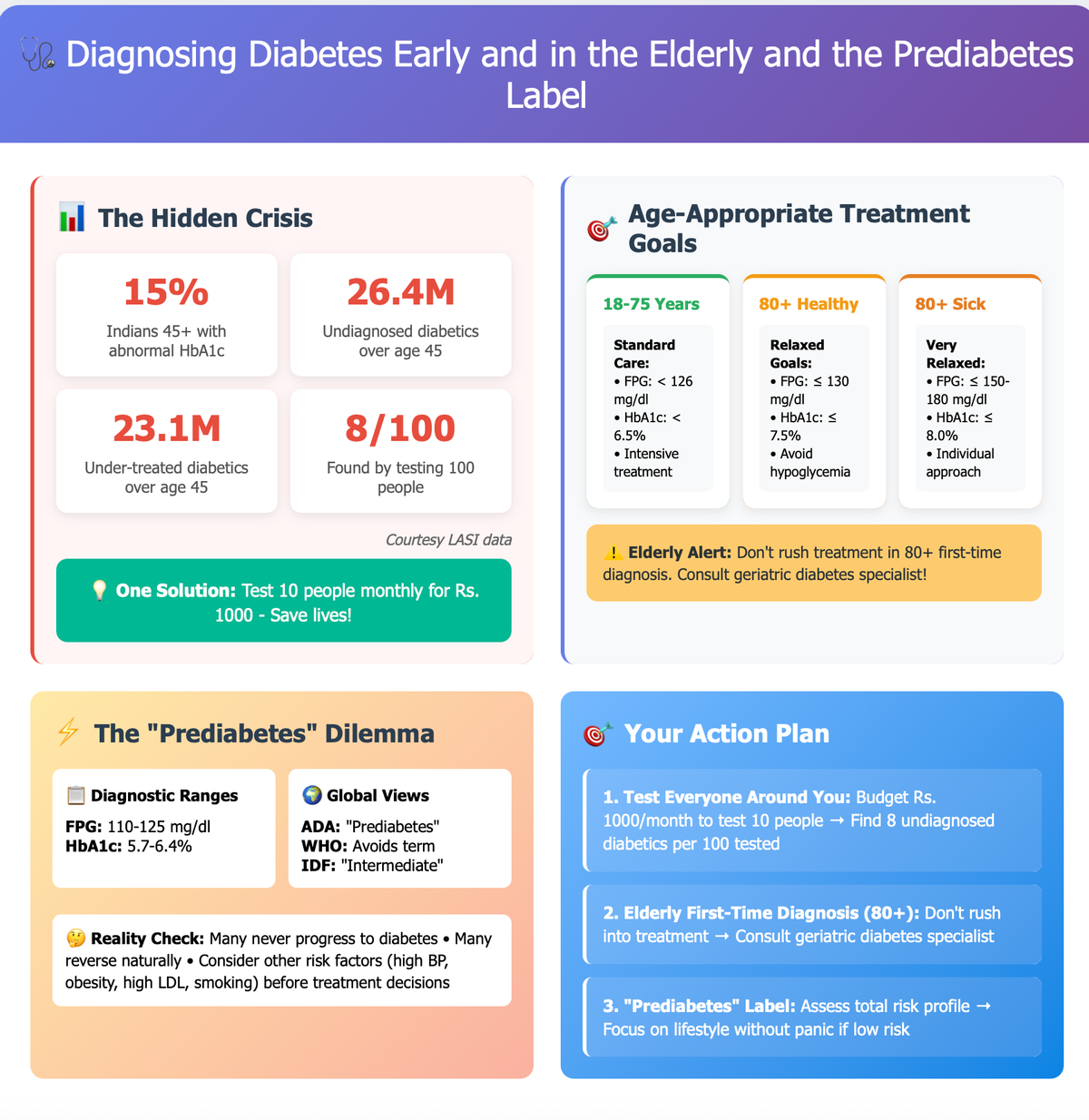
So what is prediabetes?
It is a condition where the the fasting blood sugar (100-124 mg/dl) and HbA1c (5.7 to 6.4%) levels are above normal limits, but below the values that would lead to a diagnosis of diabetes. In this intermediate range between normal and disease, it is believed that these values could cause harm with the implication that eventually you will get diabetes, and that you should take aggressive corrective action to prevent that.
So let’s start with the second issue first.
Do people with prediabetes get diabetes eventually always, something that has been assumed intuitively? Is it true? There is a brilliant recent 20-year observational study in Lancet Diabetes Endocrinology headed by Francesco Zaccadi [1] that followed 330,000 people with risk and disease estimates reported over a 10-year horizon.
This is what they found.
1. If You Are Younger (Under 55)
For every 100 people diagnosed with prediabetes under age 55, about 70 will simply stay in the prediabetes stage. They do not get worse. They do not develop full-blown diabetes. They just stay where they are.
2. If You Are Older (Over 75)
For older adults, the picture changes and about 8-9 people will eventually progress to type 2 diabetes, but often influenced by the ageing process itself and other competing diseases.
Now let’s get back to the first question. Why does the healthcare industry make such a big deal of prediabetes? Let’s look at the big 2020 meta-analysis [2] that evaluated 10 million participants from 129 studies and showed a 13-16% relative increased risk of mortality and cardiovascular disease compared to normal people.
Relative risk can be quite alarming and is often meaningless. What matters is absolute risk, which is the risk that 100 people in a room with prediabetes would have of dying or getting heart attacks. The absolute risk in this meta-analysis is so small that they had to express it per 10,000 people per year, i.e. if you put 10,000 prediabetics in a room, 7 extra will die of any cause per year compared to non-diabetics. So for 100 people in the room, the risk of death is 1 extra person (actually 0.7) out of that 100 over 10 years.
The risk is real, but small.
Why does this matter?
People make money out of prediabetes by telling you that you are abnormal and that if don’t take action now, you will become diabetic and then suffer (the so-called alarm-mongers). The growth of continuous glucose monitoring (CGM) devices in non-diabetics, health influencers on Instagram and Facebook and so-called “reversal doctors” is a testament to what people will believe in and are led to believe. This causes physical harm, monetary harm and psychological harm.
Each time a label is created, I keep coming back to Ivan Illich who warned of the harms of labeling people as diseased or pre-diseased, because it gives power to the people around us to influence our lives based on their perception of our likelihood to fall sick…whether it is the Govt or insurers or friends and family, forget about the psychological impact of being told you may have a disease that could perhaps at some time possibly kill you.
What does this mean for you and I?
If you have plasma blood glucose and/or HbA1c levels in the prediabetes range, do see your trusted doctor, but don’t panic. The chance of becoming diabetic is small (1 in 4) and more importantly the chance of dying of prediabetes is extremely small, if you are otherwise healthy and don’t have pre-existing heart disease or other major conditions. In short, the effect of prediabetes on your healthspan would be small, if at all, if you are otherwise healthy.
If you are physically active, eating sensibly, sleeping well, taking care of all your other health parameters as I have been mentioning all along and recently in my Prevention Playbook lecture, then you have nothing to worry about, but you should check your blood sugar and HbA1c once a year, as part of your annual health check-up to make sure the values are stable.
 Bhavin Jankharia
Only if you become diabetic, would you need to think of anti-diabetic treatment, but usually not until then, unless you have other diseases or conditions that necessitate treatment (prediabetes with heart disease, or morbid obesity or other diseases that need treatment and could push you from prediabetes to diabetes), in which case your trusted doctor will explain all this to you in detail.
To repeat, prediabetes is not a disease, it is not a red signal/alarm and it does not, as a rule need treatment. It is though a yellow signal that tells us to be more careful about the way we lead our lives in general, over the age of 50.
So, if you are told you have prediabetes, do not panic, do not start any “treatment”, especially the ones you see on Instagram and other social media sources, but do see your trusted doctor and/or a qualified endocrinologist/diabetologist and do not fall into the clutches of the so-called “alarm-mongers” who would like to exploit this label for their own gains.
Footnotes
1. Zaccardi F, Ling S, Gillies C, Brown K, Davies MJ, Khunti K. Trajectories of type 2 diabetes and cancer in 330 000 individuals with prediabetes: 20-year observational study in England. The Lancet Diabetes & Endocrinology. 2026 Jan;14(1):41–9.
2. Cai X, Zhang Y, Li M, Wu JH, Mai L, Li J, et al. Association between prediabetes and risk of all cause mortality and cardiovascular disease: updated meta-analysis. BMJ. 2020 July 15;m2297.
Atmasvasth Newsletter
Join the newsletter to receive the latest updates in your inbox.