The Times of India Vitamin D Ad and Why You Should Ignore It
Ignore this ad
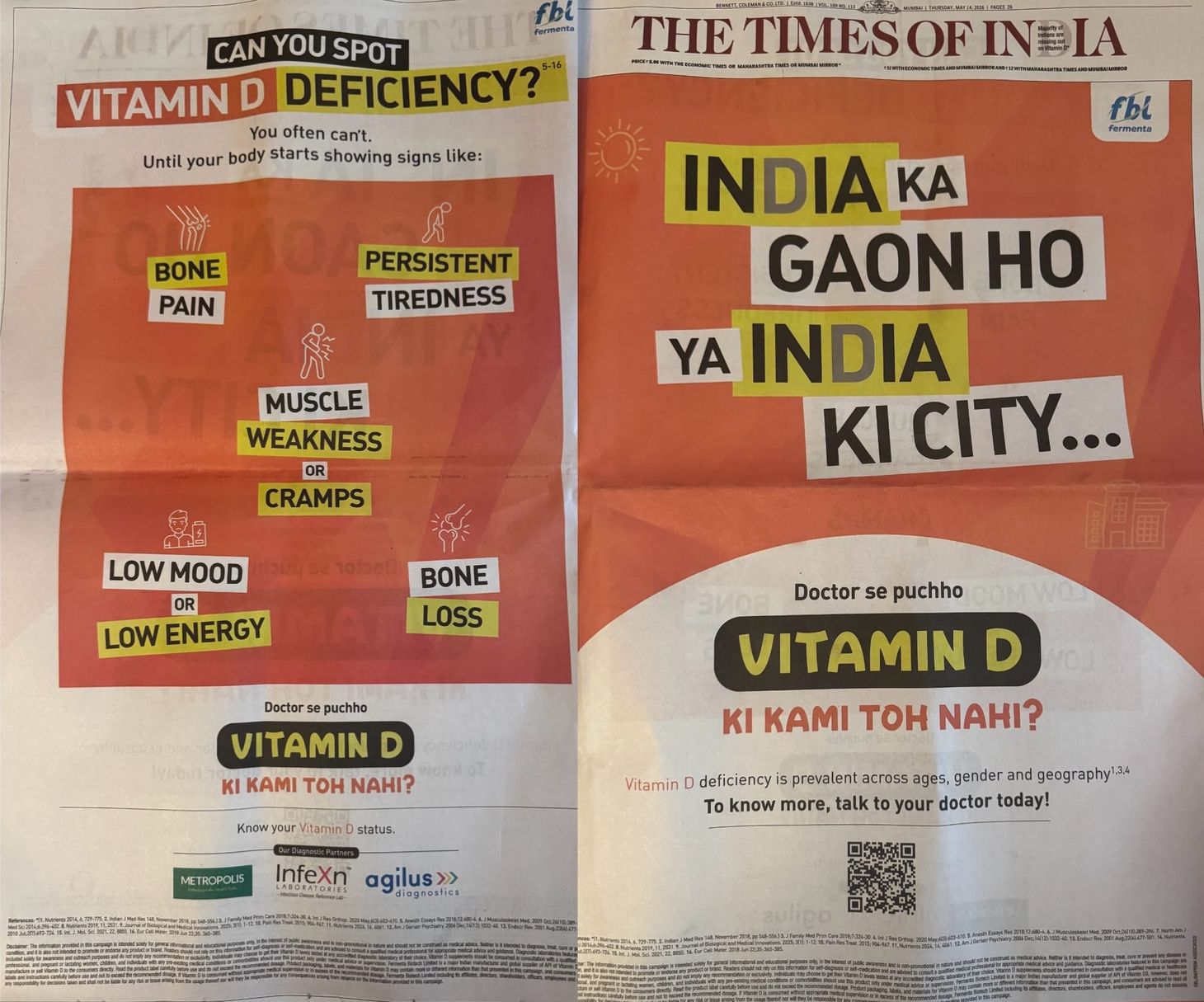
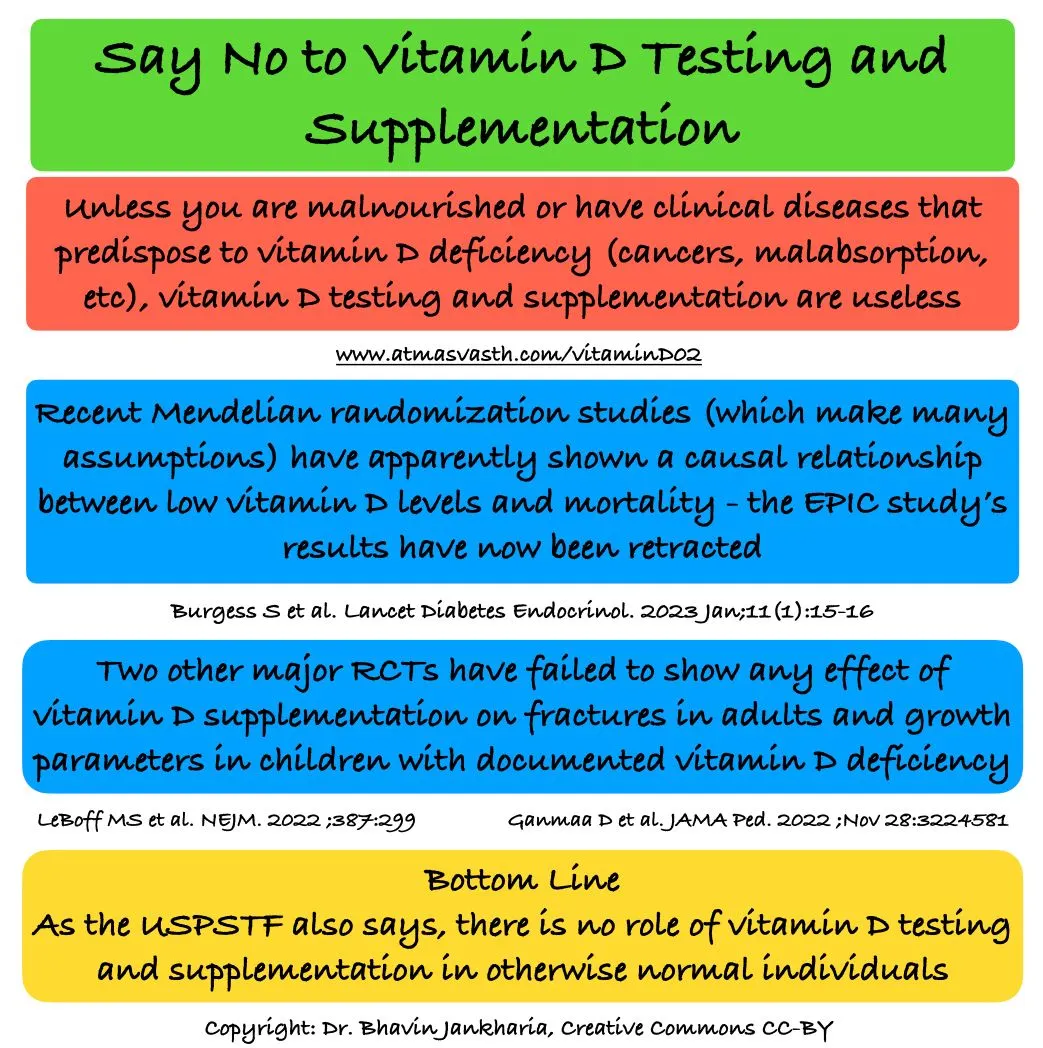
A pharma company has taken out a full-page advertisement in today's Times of India asking Indians: "Doctor se puchho Vitamin D ki kami toh nahi?" The ad lists the warning signs you should watch for — bone pain, persistent tiredness, muscle weakness or cramps, low mood or low energy, and bone loss — and urges readers to talk to their doctor.
Pretty much every adult in India will identify with at least one of those symptoms in any given month. That is not a coincidence. That is the entire business model.
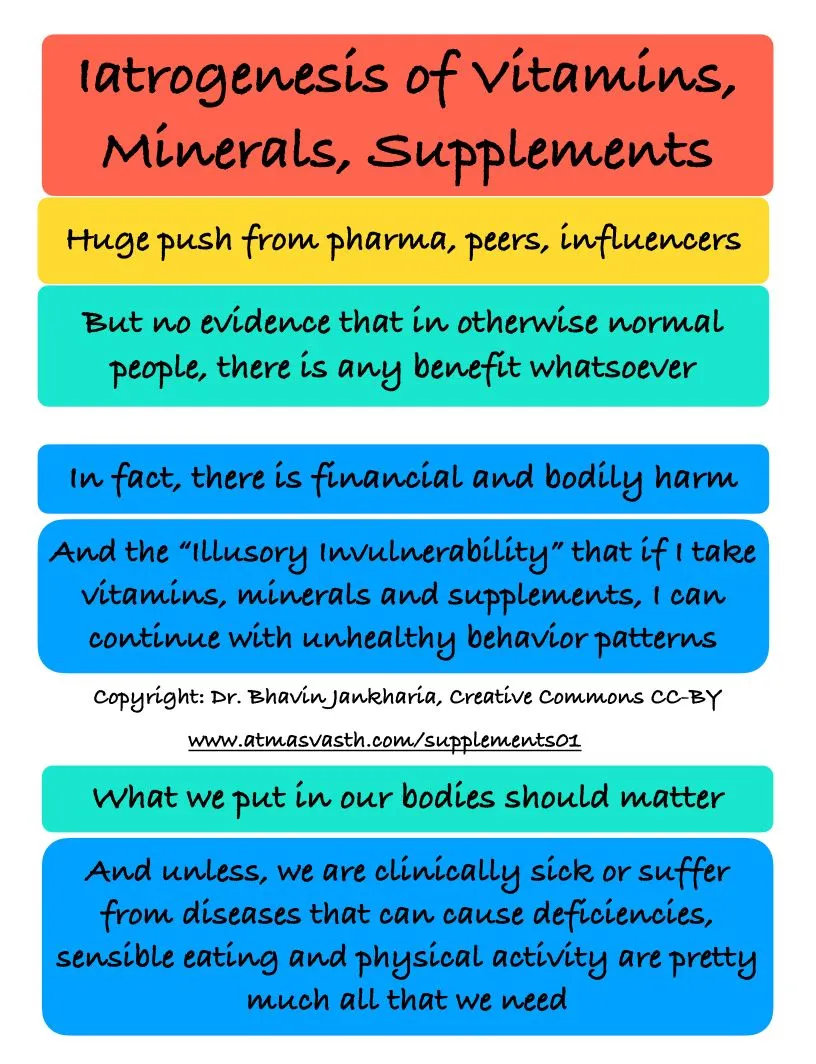
I have written about Vitamin D three times before — in January 2022, in June 2022 as part of a broader piece on the iatrogenesis of supplements, and again in December 2022. Four years on, the evidence has only strengthened, and the marketing has only intensified. So a quick refresher.
One. The US Preventive Services Task Force does not recommend routine Vitamin D testing in otherwise healthy individuals. This is one of the most rigorous evidence-review bodies in the world. Its position is unambiguous, and it has not changed.
Two. The so-called Vitamin D deficiency pandemic is largely a definition problem. In 2011, the Endocrine Society pushed the cut-off for "normal" up from 20 ng/ml to 30 ng/ml. Overnight, anyone in the 20–30 range — perfectly normal by NIH and American Academy of Family Physicians standards — was relabelled "insufficient." A study from CMC Vellore showed that 30.5% of patients flipped from normal to insufficient because of this one change. That is not biology. That is a goalpost being moved.
 Bhavin Jankharia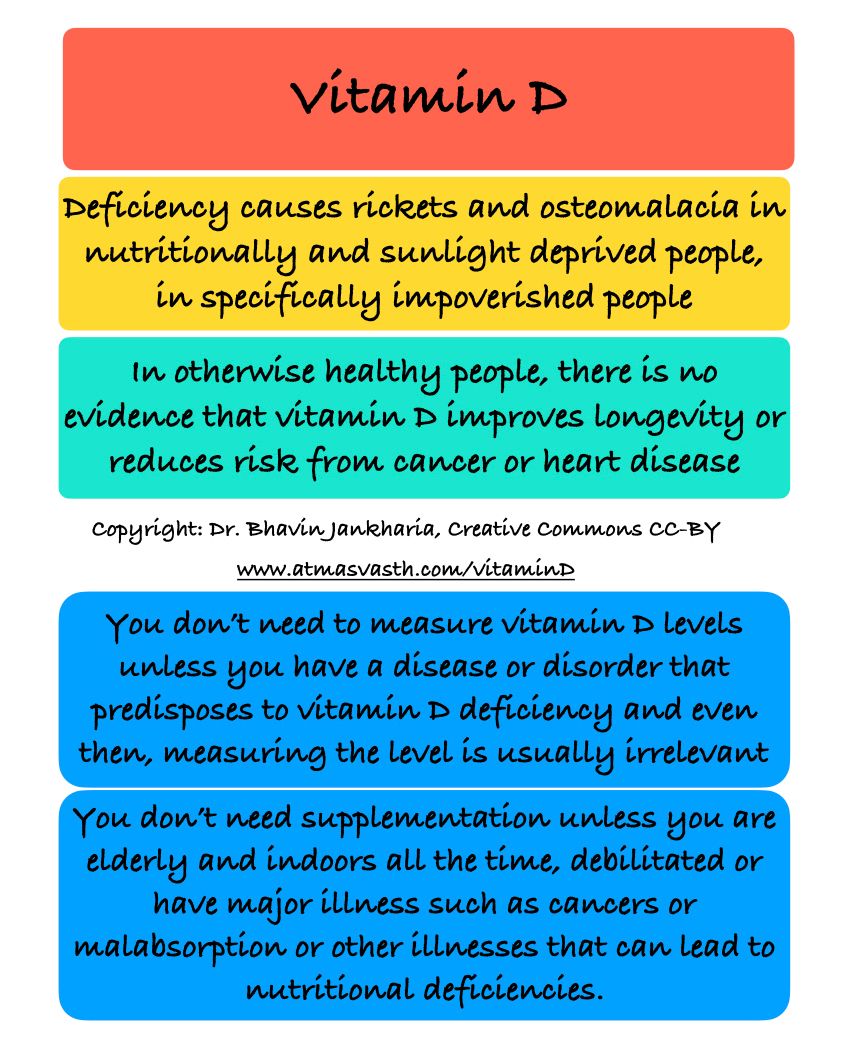
Three. The symptoms in the ad are non-specific. Tiredness, low mood, muscle cramps, vague aches — these can be caused by sleep deprivation, stress, poor cardiovascular fitness, dehydration, anaemia, thyroid problems, depression, and a dozen other things. Pinning them on a single lab value is the oldest move in the supplements playbook. It works because of the placebo effect when people start taking pills, which then reinforces the dogma in patients and doctors alike.
Four. The large randomised controlled trials are now clear. VITAL, D-Health, and the LeBoff fracture trial have all shown that Vitamin D supplementation in the general population does not reduce fractures, mortality, cancer, or cardiovascular events. An accompanying NEJM editorial in 2022 put it bluntly: providers should stop screening, and people should stop taking supplements to prevent major diseases or extend life.
 Bhavin Jankharia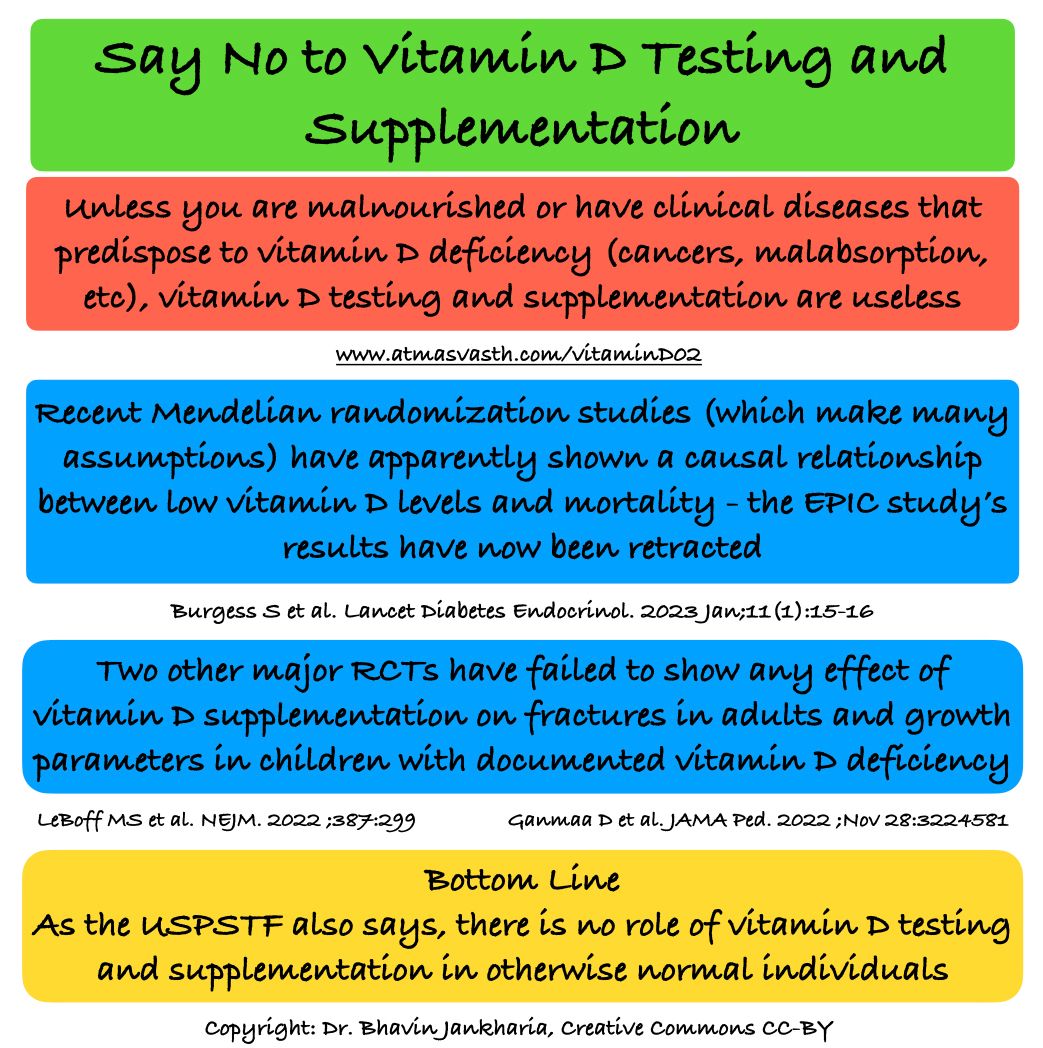
If you have a condition that predisposes you to deficiency, or you have genuine clinical signs, or you are in a high-risk group, then yes — test and treat under medical supervision. For everyone else, the most atmasvasth thing you can do this week is to walk past the ad, ignore the QR code, and not ask your doctor for a test you do not need.
Ask a different question instead: Do I actually need this test?
The Book
 Bhavin Jankharia
The Detailed 15-Point Guide to Live Long, Healthy
 Bhavin Jankharia
Atmasvasth Newsletter
Join the newsletter to receive the latest updates in your inbox.