Is Fasting an Efficient Way to Control Food Intake in an Environment of Abundance?
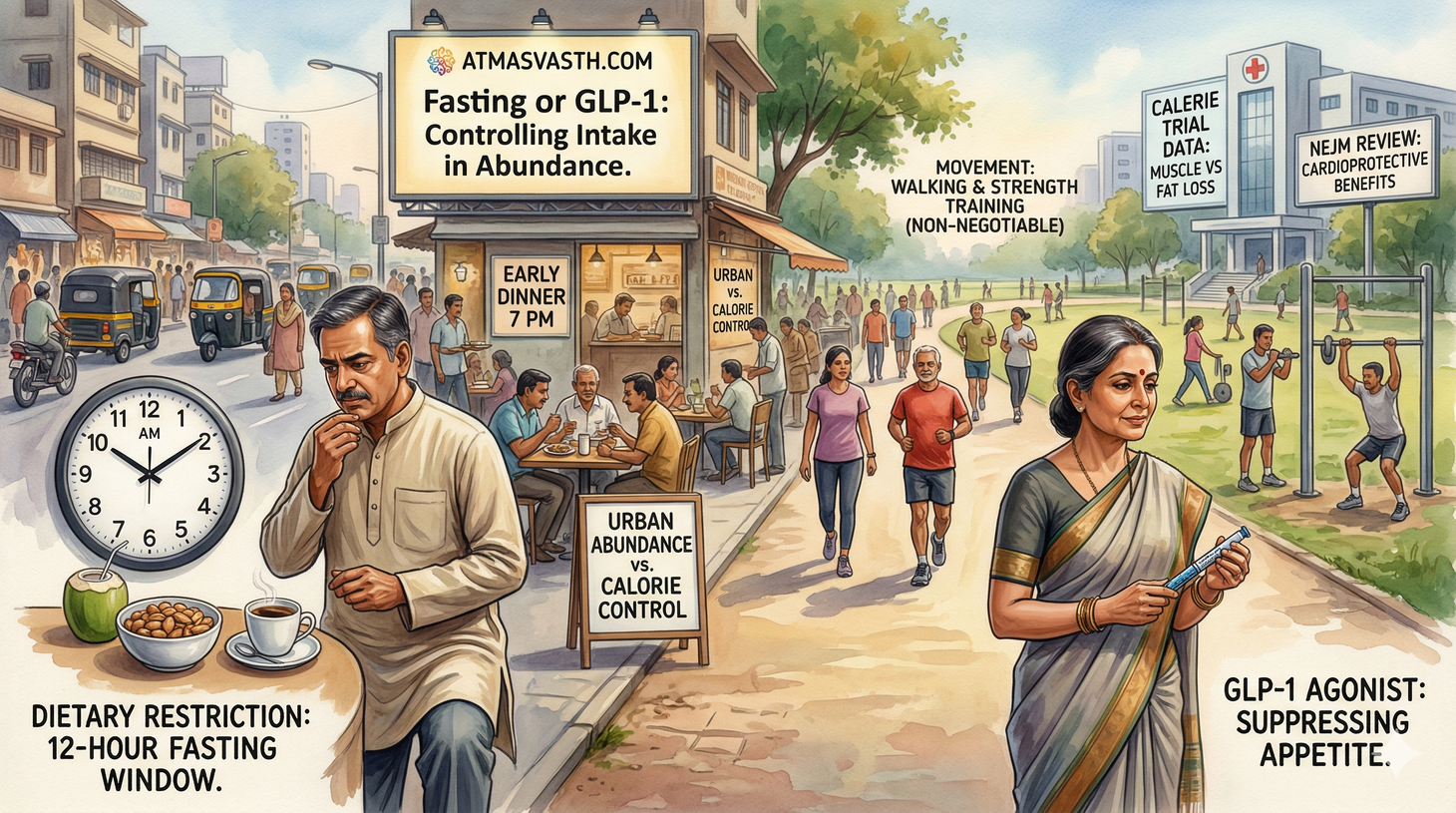
Calorie control is important in an era of abundance. Is fasting or dietary restriction efficient? Or are GLP-1 agonists better?
The Book
 Bhavin Jankharia
The Detailed 15-Point Guide to Live Long, Healthy
 Bhavin Jankharia
Audio
Soundcloud
You can listen to the audio/podcast hosted on Soundcloud by clicking the Play button below within the browser itself. You can click here to access directly from your email.
YouTube
A YouTube version of the audio is also now available here.
Text
The 2nd point in the 15-point atmasvasth guide to live long, healthy is
2. Eat less, eat smart - eat sensibly - daily.
The 5th subpoint is…
Some form of intermittent fasting, e.g. time-restricted eating (TRE), at least 5 days a week and/or some form of portion control may help.
Why restrict calories at all? It is because of the sheer abundance around us…and the idea that if we can reduce our calorie consumption in a reasonably sensible manner, it would help improve our cardiovascular risk (mainly), and our overall well-being, which in turn would help us live long, healthy.
I used to be very strict about my 16:8 (16 hours fasting and 8 hours eating) schedule when I first started this journey, but now I am fine with a 12:12 routine. I finish dinner around 9 PM and my first solid food is a handful of nuts around 10 AM the next day. Espresso and a little coconut water don’t count.
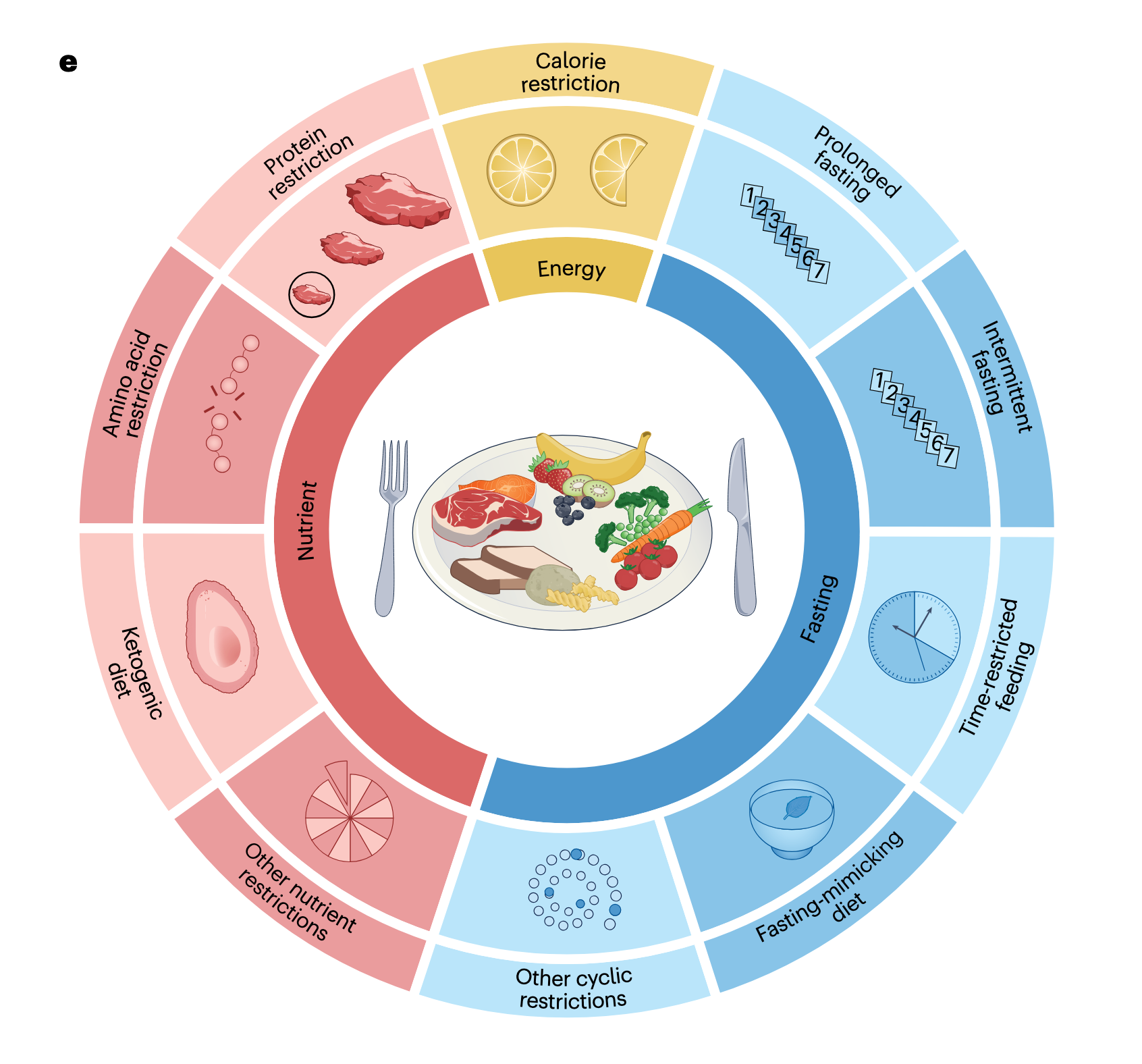
The data though for the advantages of any form of dietary restriction have always been a bit sketchy, especially in humans, and this review article in Nature, titled “Dietary Restriction in Aging and Longevity” head-authored by Tomas Schmauck-Medina helps us understand this a bit better.
There is a beautiful diagram in the paper that describes the various forms of dietary restriction, of which intermittent fasting and time-restricted eating are just two.
There is just one good human trial (CALERIE), which concluded that when people reduce their calorie intake, they lose weight (some muscle, mostly fat) and the lipid levels, blood pressure, insulin sensitivity and inflammation markers improve to some degree, but the participants were not able to sustain the 25% calorie restriction (average was 19.5% in the first 6 months and only about 9.1% in the remaining 18 months).
The paper also states that a 12-hours fasting window is more or less fine with some good data that suggests that eating an early dinner is better than eating late…our metabolism is more efficient earlier in the day; the same meal eaten at 7 pm has a different metabolic effect than at 10 pm.
This should make us rethink the impact of dietary restriction in humans. While there is some improvement of healthspan, there is no real evidence of improvement of lifespan…the downsides being living with some element of hunger all the time and reduction of muscle mass, which is why it is important to also be physically active at all times with a combination of walking (running) and strength training.
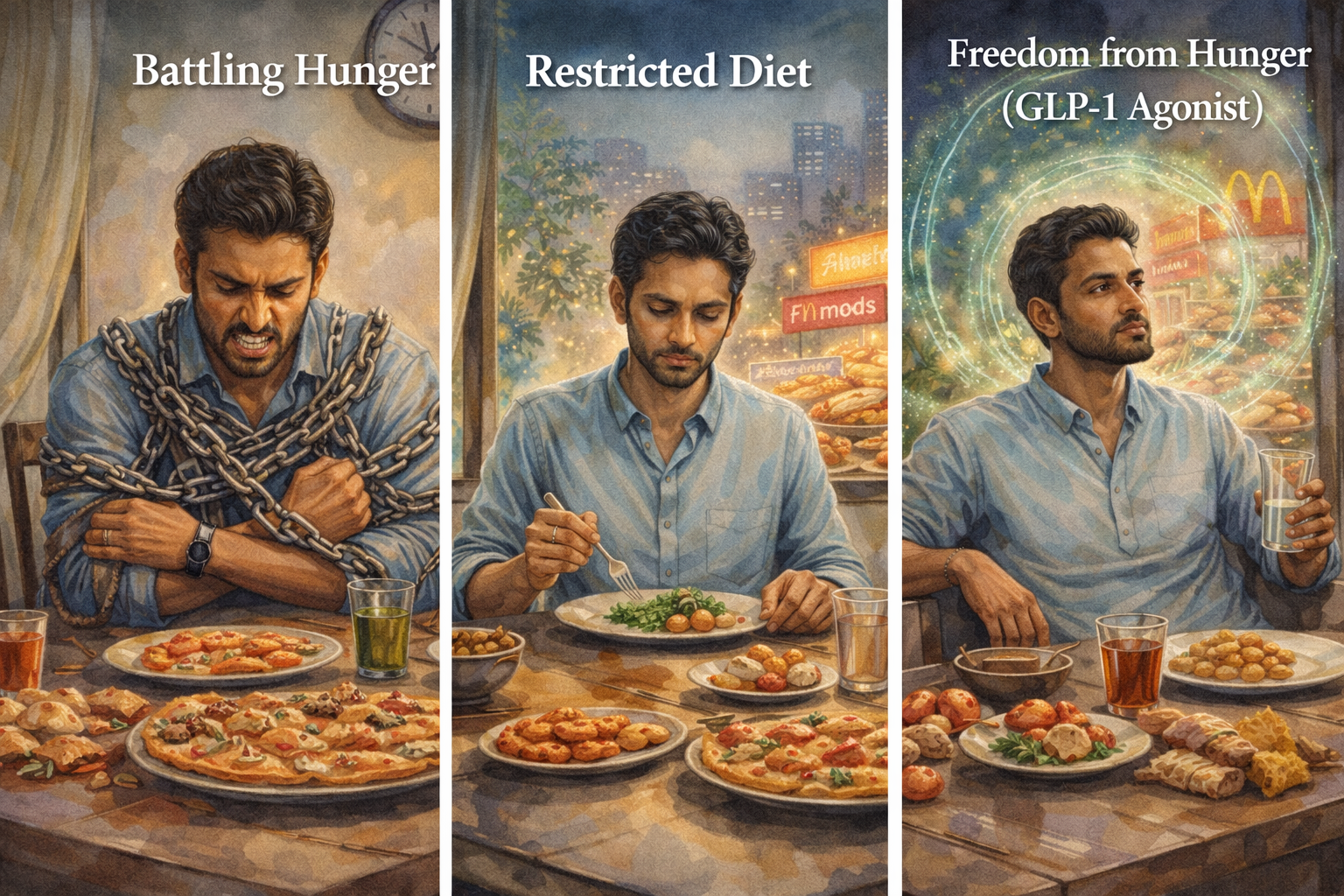
The new GLP-1 agonists that I wrote about last year pretty much do the same thing. While dietary restrictions ask you to live with hunger, GLP-1 agonists (semaglutide - Ozempic, tirzepatide - Mounjaro) suppress appetite and help us achieve the same goal, while removing the background noise of hunger.
A recent review article in the NEJM lists all the benefits in this elegant diagram.
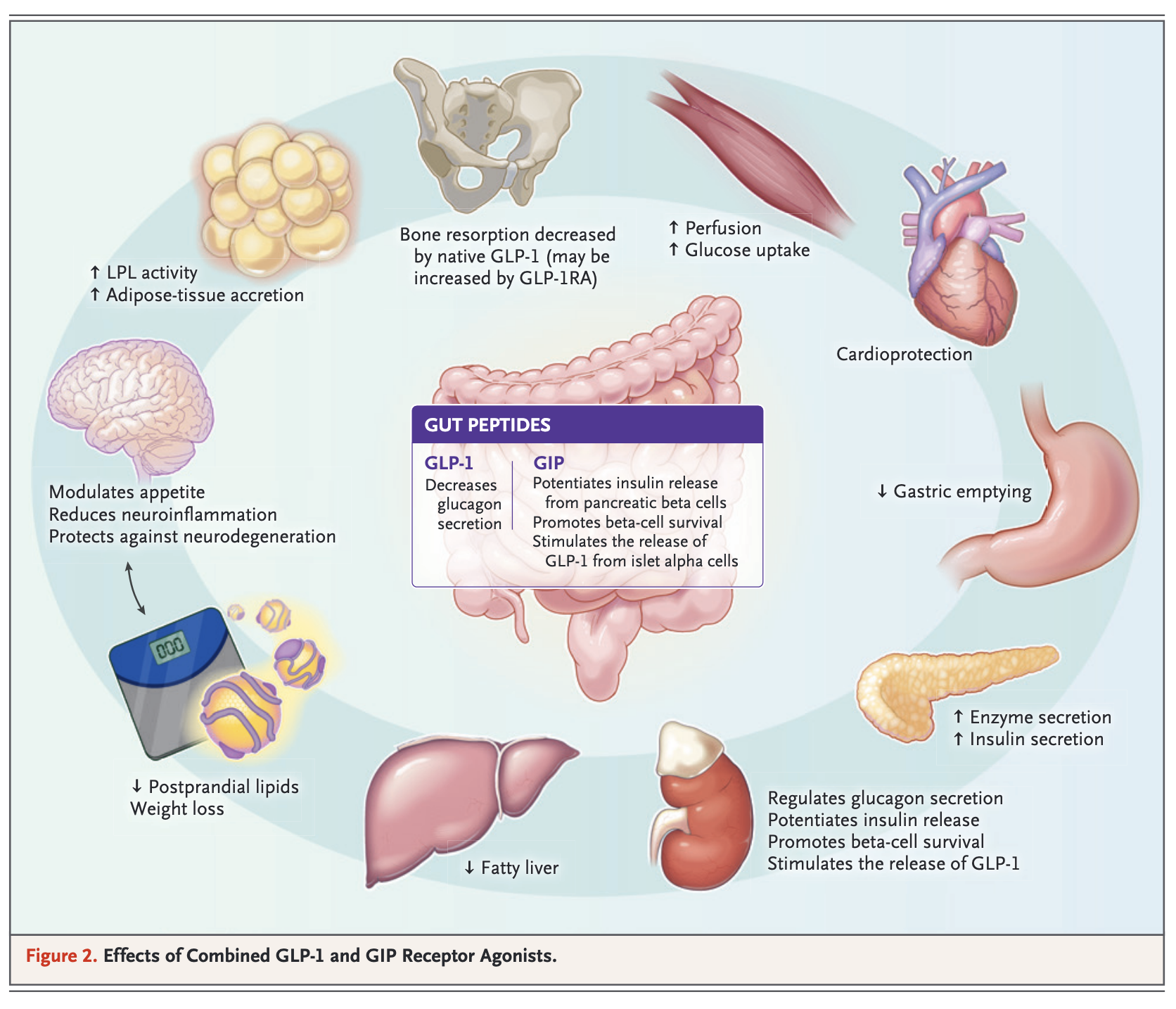
While the downsides involve some muscle loss and rebound when you stop the drugs (which also happens when we stop dietary restrictions), the drugs allow us to control our intake in a more efficient manner with the additional cardioprotective and anti-inflammatory benefits.
What does this mean for you and me?
If weight control is an issue with you, then GLP-1 agonists are an easier way to do so than fasting (suppressing appetite is easier than fighting it and living with hunger). Any intervention of this kind has to be long-term and fasting in any form is difficult to sustain long-term. We don’t yet know how long GLP-1 agonists should be used, but I suspect that just as anti-hypertensive drugs and lipid-lowering agents like statins are taken for life, GLP-1 agonists may well also become drugs to be taken lifelong.
But calorie control is more than just about weight control…it is about managing food intake, and improving cardiometabolic health and other health parameters by controlling how much and what we put inside our bodies, in this era of abundance and high calorie dense, ultra-processed foods (UPFs).

Fasting in any form is simple, free, accessible and effective if it works for you without making you feel miserable and thinking about food all the time. If that doesn’t work easily, then GLP-1 agonists offer a more efficient alternative. Both have the same goal…to control intake in an environment that constantly pushes us to overconsume.
None of this works without movement - walking (running) and strength training remain non-negotiable.
Footnotes
1. Schmauck-Medina T, Lautrup S, Di Francesco A, Mitchell SJ, Clemmensen C, Partridge L, et al. Dietary restriction in aging and longevity. Nat Aging. 2026 Mar 6;6(3):485–505. doi:10.1038/s43587-026-01091-5
2. Rosen CJ, Ingelfinger JR. GLP-1 Receptor Agonists. N Engl J Med. 2026 Apr 2;394(13):1313–24. doi:10.1056/NEJMra2500106
Atmasvasth Newsletter
Join the newsletter to receive the latest updates in your inbox.