Water, Sodium and the Slow Burn of Ageing
Why getting hydration roughly right may matter more than most of the things we currently optimise
Audio and YouTube versions available at the end of this email.
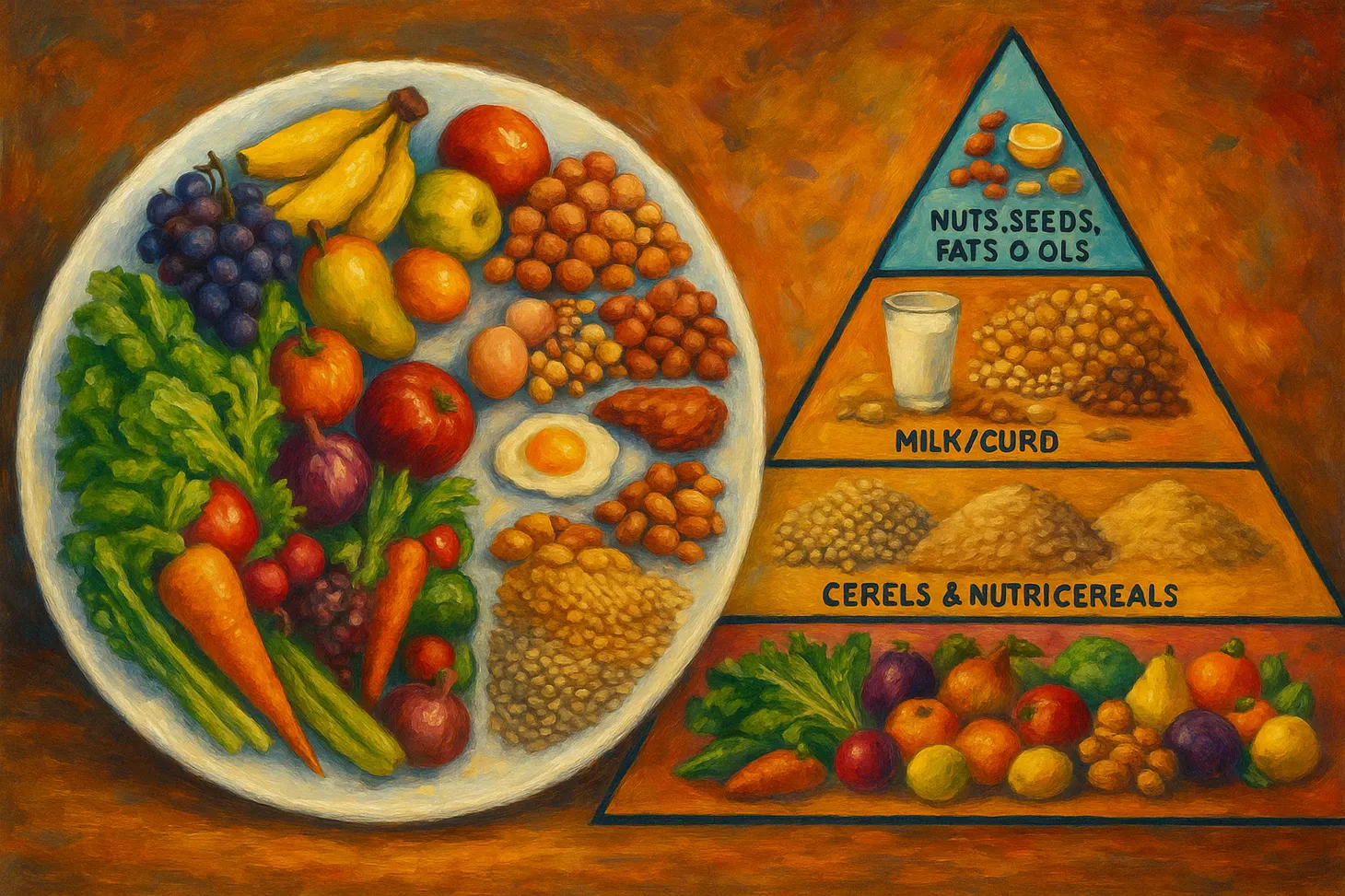
It is weird that in the last 5 1/2 years of Atmasvasth, I have addressed the issue of hydration, just twice. The first was in Jun 2024, when I deconstructed the 2024 ICMR-NIN Dietary Guidelines.
8. Drink adequate quantity of water.
The guidelines recommend drinking around 2 litres of fluid (8 glasses or so) in different combinations.
Drink adequate quantities of safe water to meet the daily fluid requirements.
Boil water when safety of the water is in doubt.
Consume fresh fruits rather than in juice form.
Prefer buttermilk, tender coconut water, lemon water, etc., as beverages in hot weather. Avoid synthetic soft drinks and carbonated beverages.
Synthetic soft drinks are not substitutes for water and therefore should be avoided.
Avoid alcoholic beverages.
Probably the most important takeaway is to avoid sugar-sweetened beverages, including packaged fruit juices and colas.
 Bhavin Jankharia
Earlier in April 2024, I had briefly addressed the issue of hydration in the context of working out and running in high humidity weather, especially with a wet-bulb temperature of 24 deg or higher (today as I write this, it is 25 deg), where I said that adequate hydration is a must in such situations, if you do decide to work out.
More importantly, the 15-point guide has no mention of water or hydration and I need to fix that.
Bhavin Jankharia
There are two parts to today’s piece. The first is the obvious and short-term one, especially in the context of hot weather and the other is about the possibility that hydration helps us live long, healthy.
The short-term part: heat, sweat, and not falling apart
A recent doubly-labelled water study in older Japanese adults [1] showed that water turnover went from 2.94 litres a day in spring (when the mean temperature was around 19 °C) to 3.58 litres a day in summer (mean 29 °C) — an extra 640 ml a day, simply because of the weather. Their physical activity actually went down in summer, and they still needed more water. For us in Mumbai, where summer means 32-35 °C with 70-85% humidity, the increment is likely larger.
So the short-term hydration rule for Indian readers is unromantic and practical:
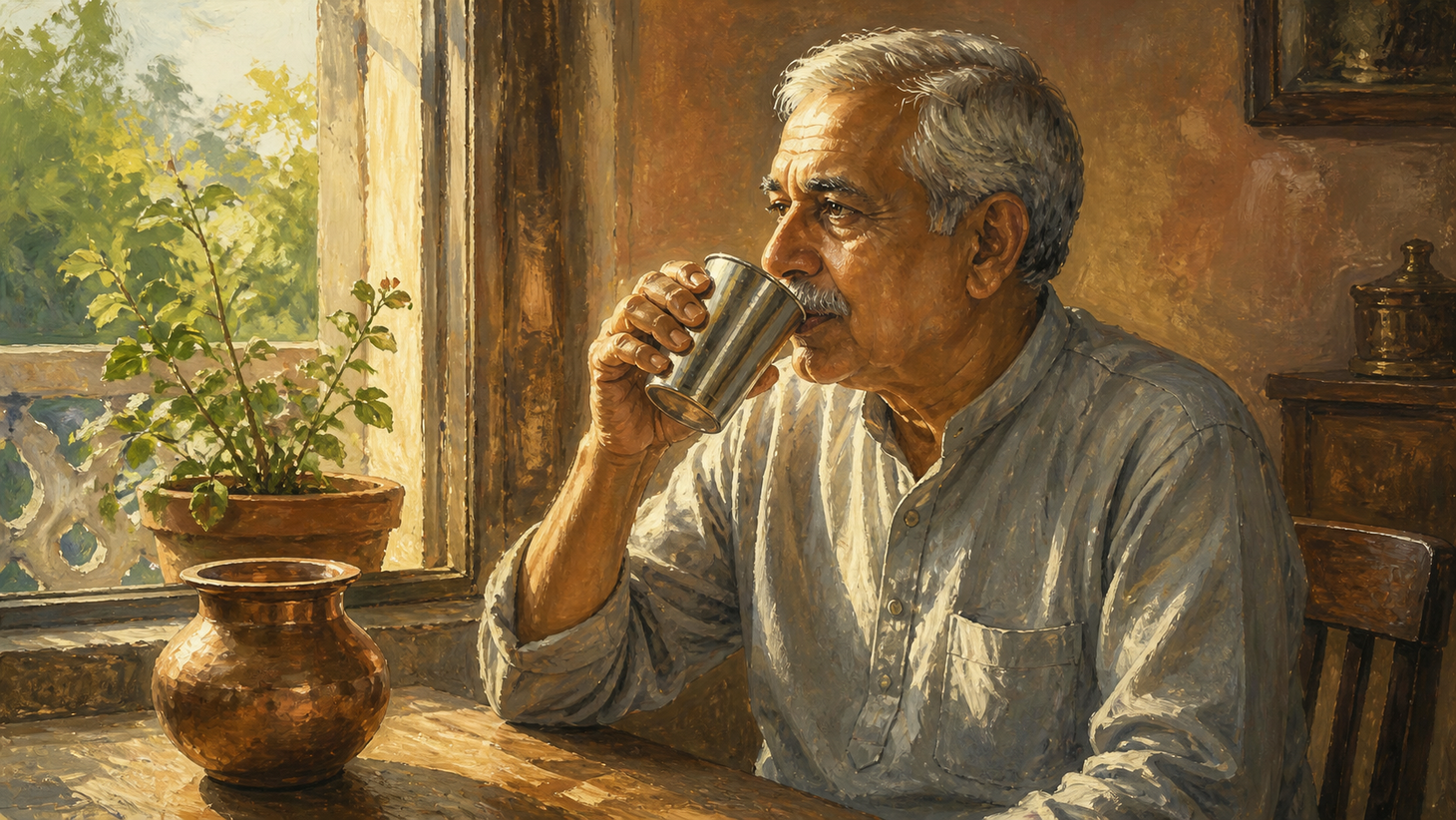
- Drink to thirst plus a bit. Thirst sensation is dulled in older adults [2], so do not wait for thirst alone if you are over 60.
- For a one-hour run or brisk walk in our weather, a glass of water before, sips of 150-200 ml every 15-20 minutes during, and rehydrating to a clear or pale-yellow urine afterwards is enough. I do not bother with electrolyte drinks for runs under an hour. For longer runs in the heat, plain water plus a pinch of salt and lime in the post-run drink works as well as anything in a packet.
- Sugar-sweetened sports drinks are mostly a marketing invention. If you are not running for more than 90 minutes, you do not need them.
- Coffee and tea count. The old idea that they "dehydrate you" is not supported by the data [3].
That covers the heat side. The more interesting story is the long one.
The long-term part: serum sodium and biological age
In 2023, Natalia Dmitrieva and colleagues at the US National Heart, Lung and Blood Institute published a study [4] using data from the Atherosclerosis Risk in Communities (ARIC) cohort — 11,255 adults followed from middle age (45-66 years) for 25 years. They used serum sodium as a proxy for habitual hydration. The finding, in plain language:
- People whose middle-age serum sodium was above 142 mmol/l had a 39% higher risk of developing chronic diseases — heart failure, dementia, chronic lung disease, stroke, diabetes, peripheral vascular disease, atrial fibrillation — over the next 25 years.
- Those above 144 mmol/l had a 21% higher risk of dying earlier than expected.
- Those above 142 mmol/l had up to a 50% higher chance of being biologically older than their chronological age, measured through 15 age-dependent biomarkers.
The reference range for serum sodium that any lab in India will print is 135-145 mmol/l. So all these people were "normal." But the data suggest that within that "normal" range, the optimal window is narrower — somewhere between 138 and 142 mmol/l. Both ends carry risk. Sodium under 137 was associated with even higher mortality, mostly because it tends to reflect underlying disease.
Lancet Healthy Longevity editorial in March 2026 [5] put it bluntly: about a quarter of older adults living in the community are dehydrated, and the long-term costs of this are only now becoming visible.
This is observational data. The intervention trials are still pending. But it is a consistent signal across many cohorts, with a plausible mechanism — chronic mild underhydration keeps vasopressin and water-conservation pathways constantly switched on, and that low-grade activation seems to drive pro-inflammatory, pro-coagulation and metabolic changes that look a lot like accelerated ageing.
The optimal window — and why "drink more" is not the lesson
The instinctive Indian reading of all this will be: drink eight glasses, drink ten, drink fifteen, carry a bottle everywhere. That is not what the data say.
The same Dmitrieva paper showed that very low serum sodium (135-137 mmol/l) was associated with the highest mortality of any group, partly because excessive water intake without enough sodium can cause hyponatremia, which is genuinely dangerous, especially in older adults. Marathon runners have died from this. Older adults with mild renal impairment who decide to "flush out their kidneys" with three litres a day are the next most common group at risk.
The cultural detour — are we drinking more than ever?
There is a popular essay by Paul Skallas aka Lindyman called The Hydration Revolution that argues we look younger today than people did in 1980 because we drink dramatically more water than any human population in history. It is mostly cultural commentary, not science, and the proposed mechanism is hand-waving. But the underlying observation is correct: until somewhere in the late 1990s, very few people walked around with water bottles. Even marathon runners were told not to drink during races. Today every meeting room in Mumbai has bottled water, every gym has a hydration station, and every wellness influencer carries a one-litre "bucket".
I do not think the bottle culture is what makes us look younger. Better dentistry, sunscreen, less smoking, gentler skincare, and probably statins do most of that work. But the cultural shift toward routine hydration may, by accident, be moving large parts of the urban population into the 138-142 mmol/l sweet spot that the ARIC data point to. If that is true, it is one of those rare examples of a wellness fad that turned out to have a real biological dividend.
What does this mean for you and me?
We spend a great deal of effort arguing about vitamin D supplements, chasing fad diets that don’t help and taking intravenous vitamin and mineral boosters that are just foo-foo medicine. Meanwhile, somewhere between a quarter and half of Indian adults walk around mildly underhydrated for most of their lives, and the long-term cost of that may quietly add up to more than any of those individual optimisations.
Drinking water is free. Getting it about right — neither too little nor too much — is one of the easier things to do.
Therefore, a reasonable goal for someone in their 50s, 60s or 70s in India, without heart failure, CKD, or a sodium-handling problem, is something like:
- Roughly 2-2.5 litres of total water a day for women and 2.5-3 litres for men, including water in food. About 70% comes from fluids — water, coffee, tea, milk, buttermilk, dal, soups — and 30% from food. Indian diets, with their high water content (rice, dal, sabzi, fruit), already supply more food-water than typical Western diets [2].
- An extra 500-700 ml on hot or active days.
- Aim for pale yellow urine, not colourless. Colourless urine all day in someone over 65 is a sign of overhydration, not virtue.
- If you have heart failure, advanced CKD, liver cirrhosis, or are on diuretics or anti-depressants like SSRIs, please ignore this entire paragraph and follow your doctor’s specific fluid prescription. For these conditions, fluid restriction is the rule, not the exception.
If you want a single biochemical anchor: the next time you do a routine health check, look at your serum sodium. If it is between 138 and 142 mmol/l, you are probably drinking about right. If it is consistently above 142, drink a bit more. If it is below 137 and you feel fine, ask your doctor to repeat it before doing anything; persistently low sodium is a sign of something else.
It is just weird that it took this much time to talk about it.
Listening Options
Audio File
YouTube
Footnotes
- Kim H-K, Nakayama Y, Yoshida T, et al. Hydration, water requirements, and energy balance from spring to summer in free-living older adults: a doubly labelled water study. Sci Rep. 2026;16:9872. doi:10.1038/s41598-026-38832-w
- Pence J, Davis A, Allen-Gregory E, Bloomer RJ. Hydration Strategies in Older Adults. Nutrients. 2025;17:2256. doi:10.3390/nu17142256
- Maughan RJ, Watson P, Cordery PA, et al. A randomized trial to assess the potential of different beverages to affect hydration status: development of a Beverage Hydration Index. Am J Clin Nutr. 2016;103(3):717-723. doi:10.3945/ajcn.115.114769
- Dmitrieva NI, Gagarin A, Liu D, Wu CO, Boehm M. Middle-age high normal serum sodium as a risk factor for accelerated biological aging, chronic diseases, and premature mortality. eBioMedicine. 2023;87:104404. doi:10.1016/j.ebiom.2022.104404
- The Lancet Healthy Longevity. The importance of safeguarding hydration for healthy ageing. Lancet Healthy Longev. 2026;7:100846. doi:10.1016/j.lanhl.2026.100846
The Book
 Bhavin Jankharia
The Detailed 15-Point Guide to Live Long, Healthy
 Bhavin Jankharia
Atmasvasth Newsletter
Join the newsletter to receive the latest updates in your inbox.