Pills vs. Sneakers: Why No Multivitamin Supplements Can Do What Movement Does
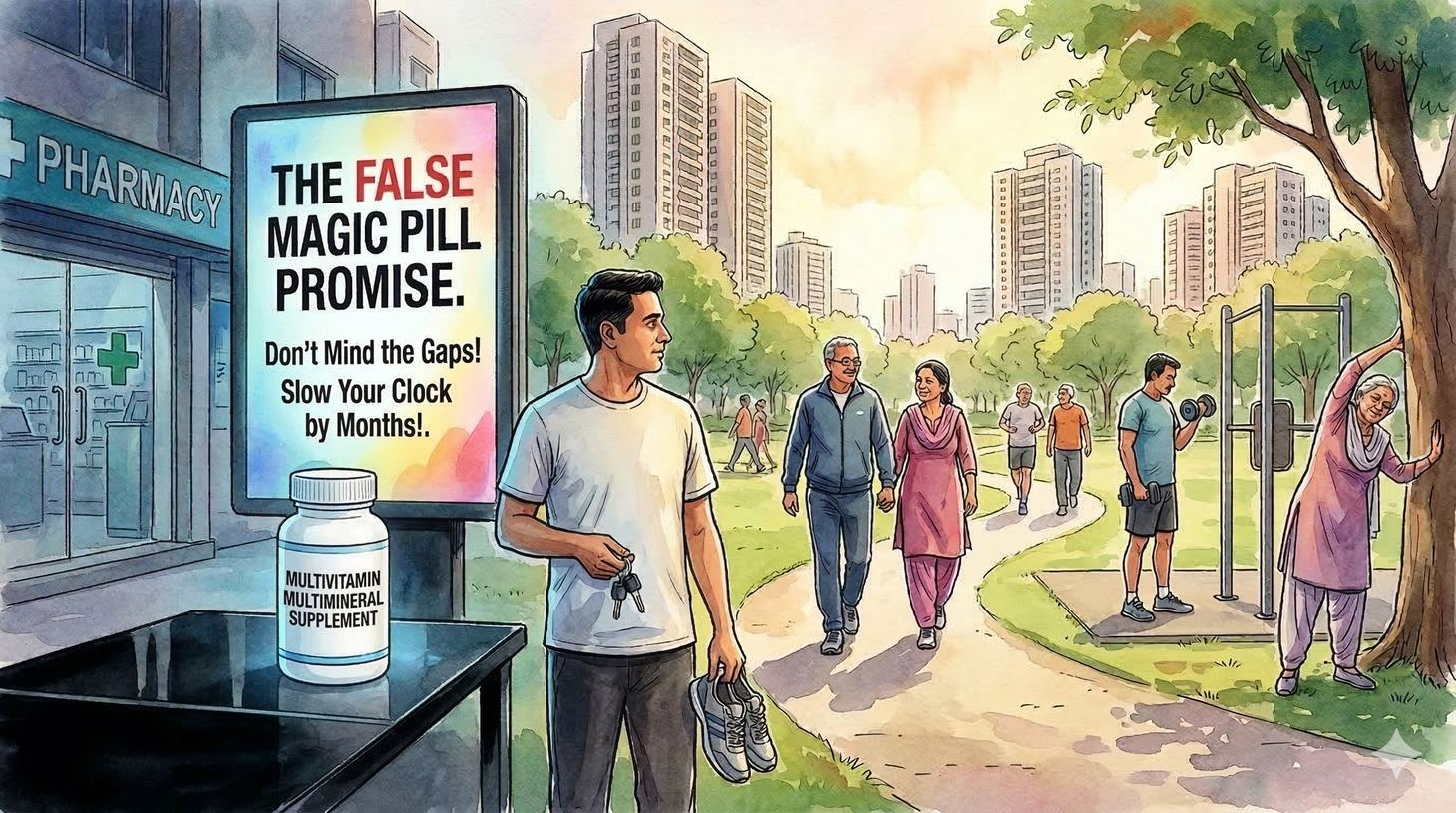
True health comes from your kitchen and your sneakers, not a plastic bottle.
The Book
 Bhavin Jankharia
The Detailed 15-Point Guide to Live Long, Healthy
Bhavin Jankharia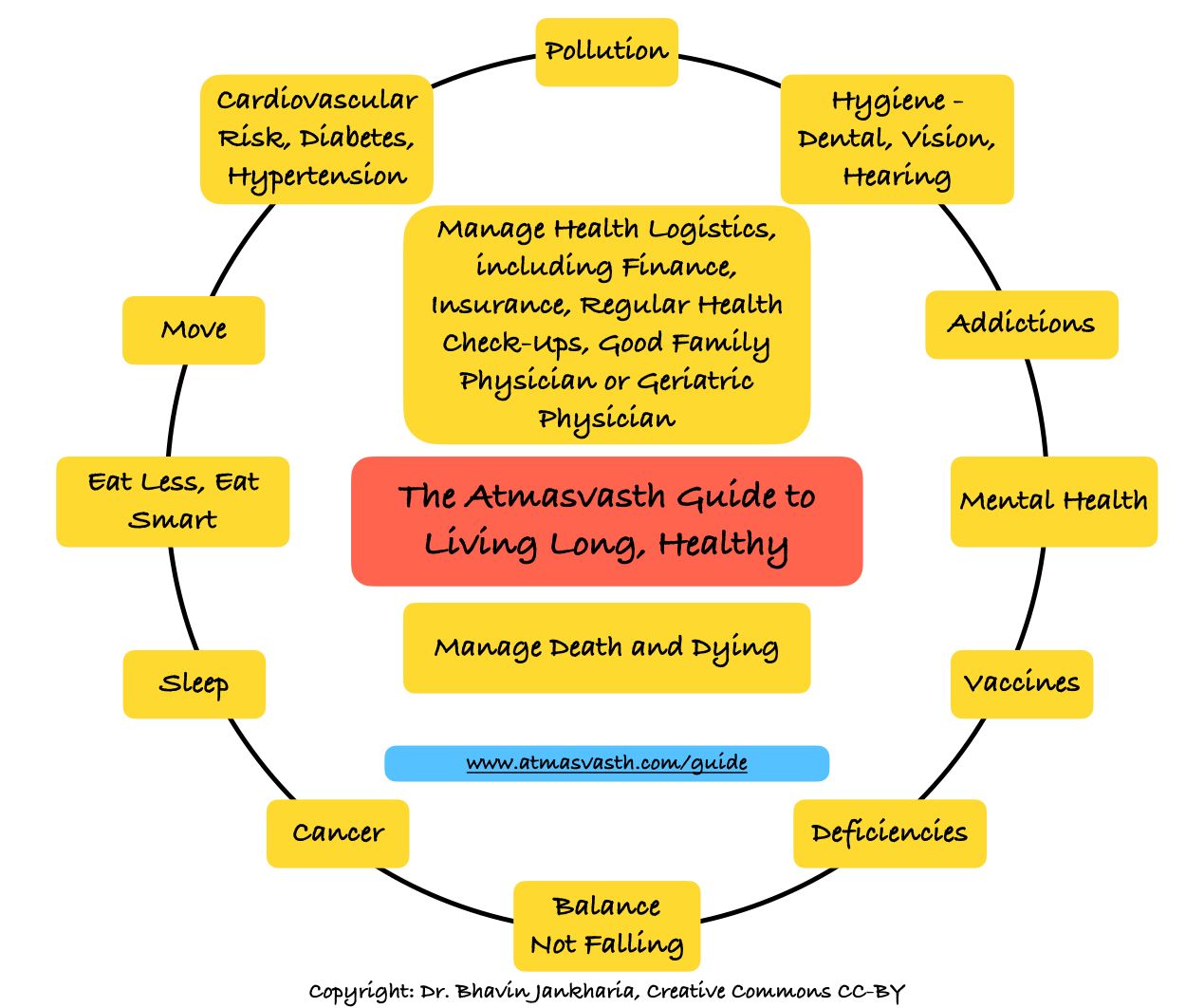
Audio
Soundcloud
You can listen to the audio/podcast hosted on Soundcloud by clicking the Play button below within the browser itself. You can click here to access directly from your email.
YouTube
A YouTube version of the audio is also now available here.
Text
Most of last year, I kept seeing this grating ad on television during one of the popular Hindi television serials that is always on, in the background, during family dinner. There is a “health-coach” dressed in a white-coat to look like a doctor, who explains why we need to fill the gaps between breakfast, lunch and dinner with multivitamin supplements of a brand called Centrum, because in the “in-between” phase, it is assumed that our body is a leaky bucket for vitamins and minerals that needs topping up. Here are two stills from that ad.
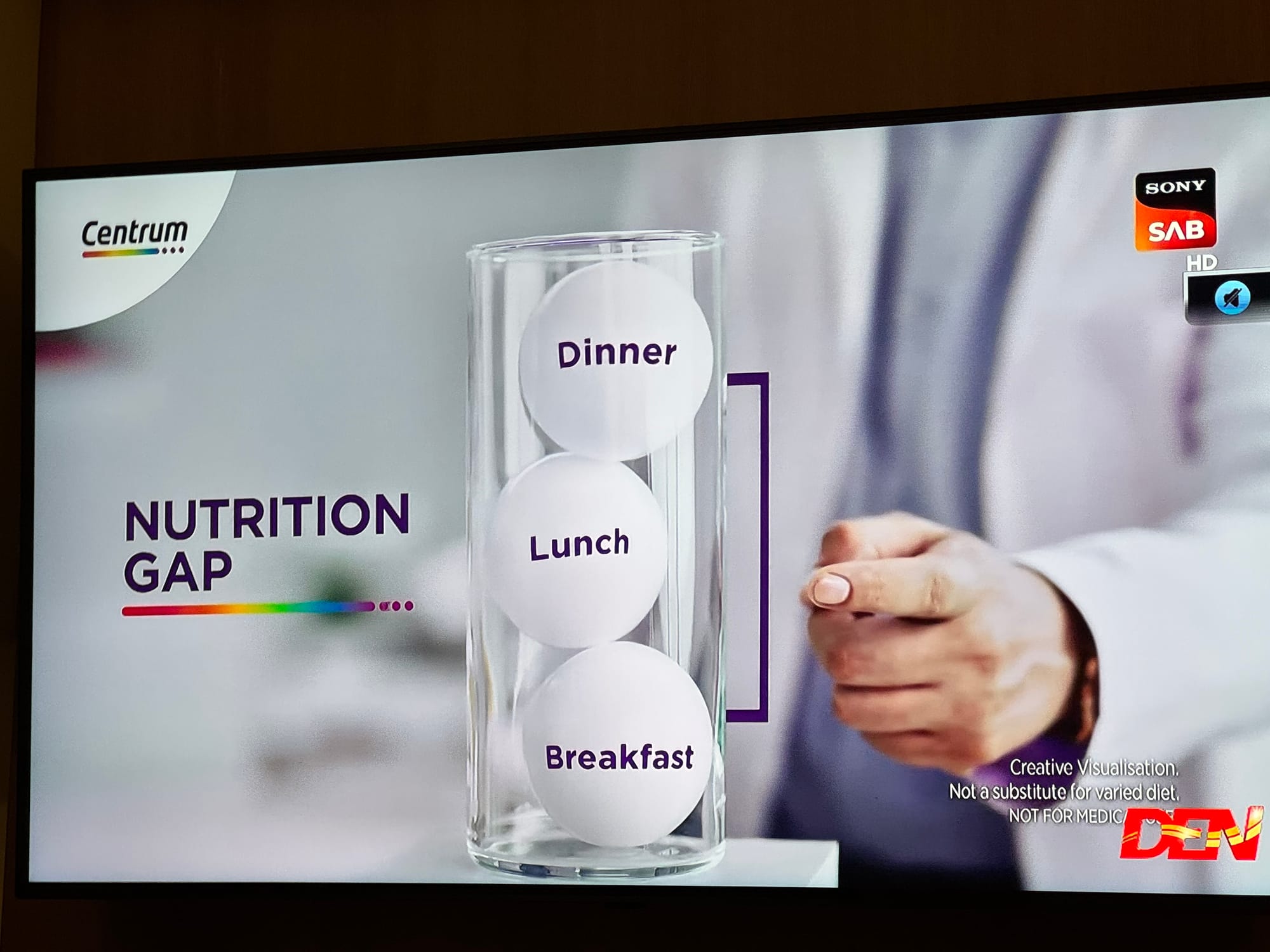
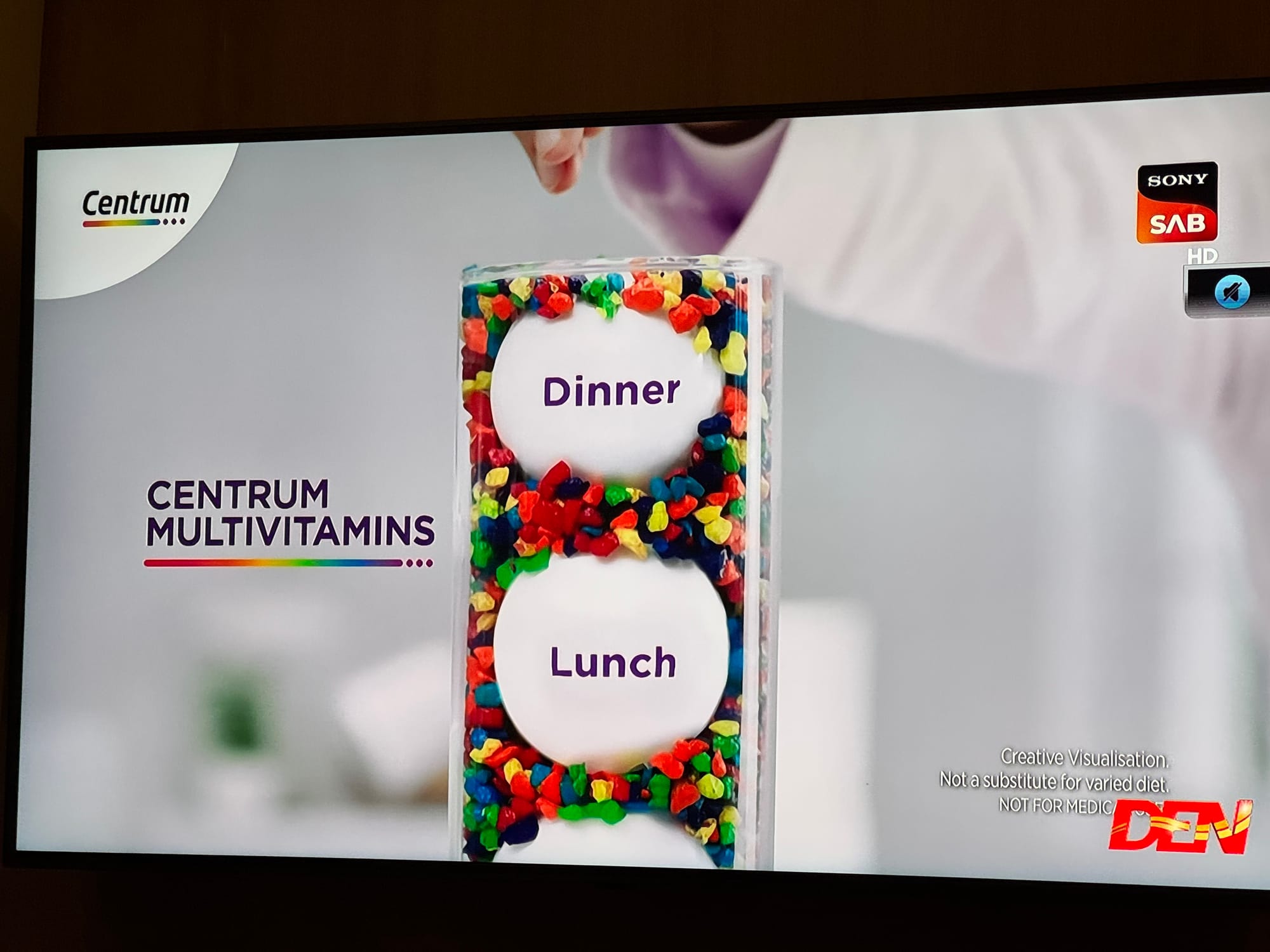
This is just complete poppy-cock.
I was reminded of this when I came across this article that Nature published on 09 Mar 2026 titled, “Effects of daily multivitamin–multimineral and cocoa extract supplementation on epigenetic aging clocks in the COSMOS randomized clinical trial” which claims that compared to placebo, daily multivitamin and multimineral supplementation reduces the rate of progression of second-generation epigenetic clocks, interpreted to mean that these supplements can slow down biological ageing, which is a surrogate marker for chronological ageing or actual true ageing. The supplement used was Centrum Silver.
 Sidong Li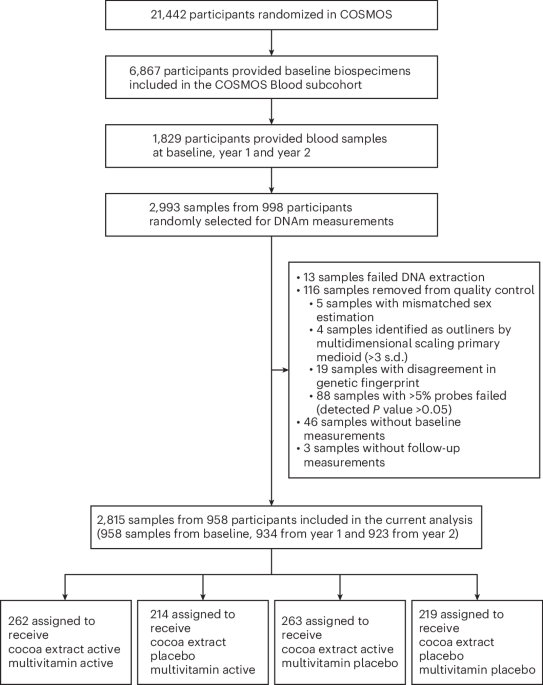
There are so many issues with this study. As Dr. Perry in his piece on Medscape shows, the positive effect was seen only at 2 years in only 2 of the models of biological ageing, with an at best slowing of 1.4 to 2.6 months for every 1 year of daily use as compared to someone not using the supplements. Multivitamins seem to work within this range, if you cherry-pick your model. And that is not even the main issue. The bigger problem is that this does not really translate into improvement of actual ageing, which another group lead by Erikka Loftield did address in an article in JAMA Network Open in 2024 [3], where they looked at around 390,000 people and tracked them for around 27 years and found that multivitamin use was not associated with any mortality benefit. Period. Nor do multivitamins help prevent cancer or cardiovascular disease as a USPSTF report from 2022 shows [4].
So then....why? Why do people keep popping multivitamin pills (most of my friends and family members do) and why do researchers continue to spend time and money on this subject?
It is the quest for the magic pill, the one pill to conquer all the evils of ageing, the one pill that will help us live long, healthy. While physical activity is actually that magic pill, it does not get traction, because it is just too much effort. It is only a small percentage of the population that will walk 4000 steps every day, 6-7 days a week and indulge in 2-3 sessions of strength training per week. The rest want an easy way out and multivitamin supplements provide that mirage, that shimmering hope that popping one capsule or tablet per day will take care of all their problems, prevent sickness and allow them to age gracefully into their 80s or 90s.
 Bhavin Jankharia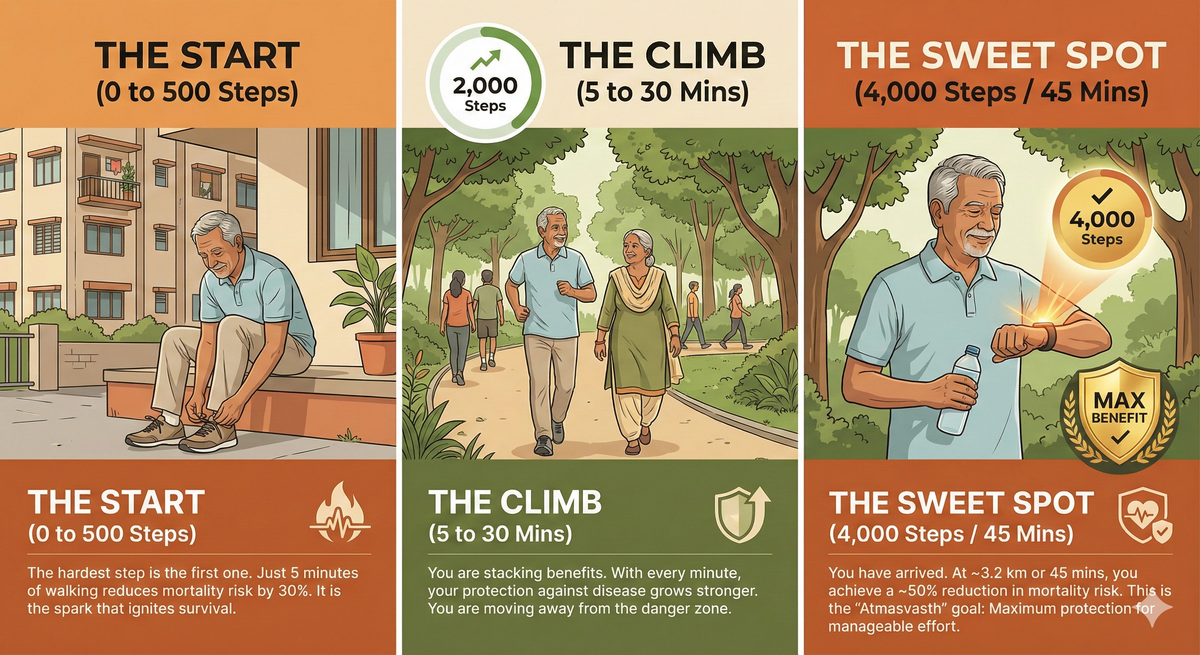
We have already seen multiple times in the past how physical activity increases healthspan significantly, but I haven’t ever addressed the relationship between physical activity and epigenetic ageing [5,6]. Two papers, though observational show that the improvement of biological ageing is far more with physical activity than taking multivitamin tablets, even though the COSMOS study is a randomized controlled trial and the others are observational.

In brief, the numbers are striking even accounting for the fact that the PA studies are observational...physical activity reduces biological clocks far more than multivitamin supplements.
When I discuss the issue of supplements with people, they then say, “what is the harm?”. I wrote about this in Jun 2022 in my piece on “Iatrogenesis of Vitamins, Minerals and Herbal Supplements.”
 Bhavin Jankharia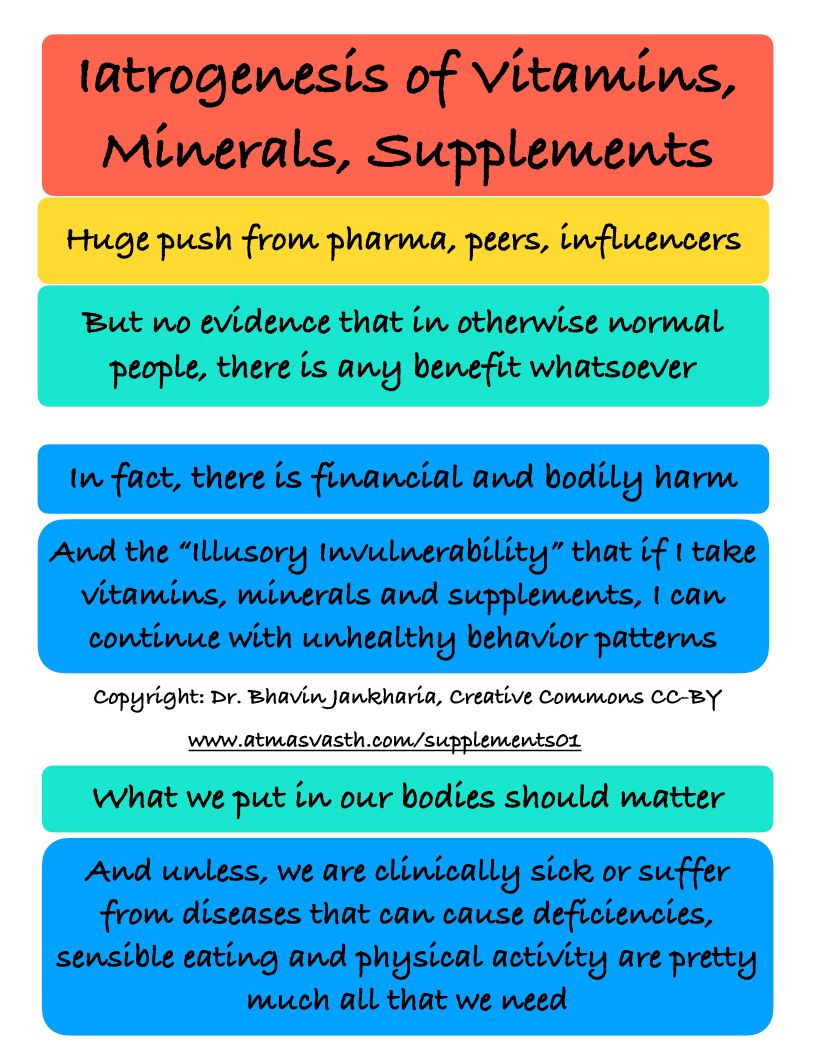
Our body is a wondrous construct of multiple systems working in concert to maintain a finely balanced homeostasis, but dependent on the external environment, the food we eat and the way we use our bodies and minds.
It is important therefore that we be cognizant of what we put in our body, what we do with our body and mind, what our body and mind are exposed to externally and how they develop due to our internal genetic makeup.
If you are deficient, whether it is vitamin D or B12 or iron or folate, then yes, supplementation is needed and the older you get, the more the chances of these deficiencies, especially if you don’t have a well-balanced diet, rich in these foods. So Jains, for example especially strict Jains are always at risk of B12 deficiency and many people as they age have iron deficiency, which is often better addressed with regular intravenous iron infusions, rather than daily multivitamin and mineral tablets.
If you are however not deficient, a daily intake of multivitamins and minerals in the form of a tablet will not help, worse, can harm and even worse create a false sense of security that by taking these tablets, you are going to be healthy and replace the need for physical activity, sensible eating, good sleep and the other steps needed to live long, healthy.
What does this mean for you and me? If you have clinical disease, or are nutritionally deficient, not eating sensibly and your doctors find that you are deficient, then you need to take those specific supplements as a form of treatment.
If you are not deficient, then avoid putting anything inside your body that is not needed or does not give you joy.
True health comes from your kitchen and your sneakers, not a plastic bottle.

Footnotes
- Li S, Hamaya R, Zhu H, Chen BH, Pereira AC, Ivey KL, et al. Effects of daily multivitamin–multimineral and cocoa extract supplementation on epigenetic aging clocks in the COSMOS randomized clinical trial. Nat Med. 2026 Mar 9. doi:10.1038/s41591-026-04239-3
- https://www.medscape.com/viewarticle/multivitamins-slow-aging-dont-believe-it-2026a1000782?ecd=wnl_tp10_daily_260310_MSCPEDIT_etid8172324&uac=3793HK&impID=8172324
- Loftfield E, O’Connell CP, Abnet CC, Graubard BI, Liao LM, Beane Freeman LE, et al. Multivitamin Use and Mortality Risk in 3 Prospective US Cohorts. JAMA Netw Open. 2024 Jun 26;7(6):e2418729. doi:10.1001/jamanetworkopen.2024.18729
- O’Connor EA, Evans CV, Ivlev I, Rushkin MC, Thomas RG, Martin A, et al. Vitamin and Mineral Supplements for the Primary Prevention of Cardiovascular Disease and Cancer: Updated Evidence Report and Systematic Review for the US Preventive Services Task Force. JAMA. 2022 Jun 21;327(23):2334. doi:10.1001/jama.2021.15650
- Ammous F, Peterson MD, Mitchell C, Faul JD. Physical Activity Is Associated With Decreased Epigenetic Aging: Findings From the Health and Retirement Study. J cachexia sarcopenia muscle. 2025 Jun;16(3):e13873. doi:10.1002/jcsm.13873
- You Y, Chen Y, Ding H, Liu Q, Wang R, Xu K, et al. Relationship between physical activity and DNA methylation-predicted epigenetic clocks. npj Aging. 2025 Apr 12;11(1):27. doi:10.1038/s41514-025-00217-0
Atmasvasth Newsletter
Join the newsletter to receive the latest updates in your inbox.