Loneliness is More Than Just a Feeling
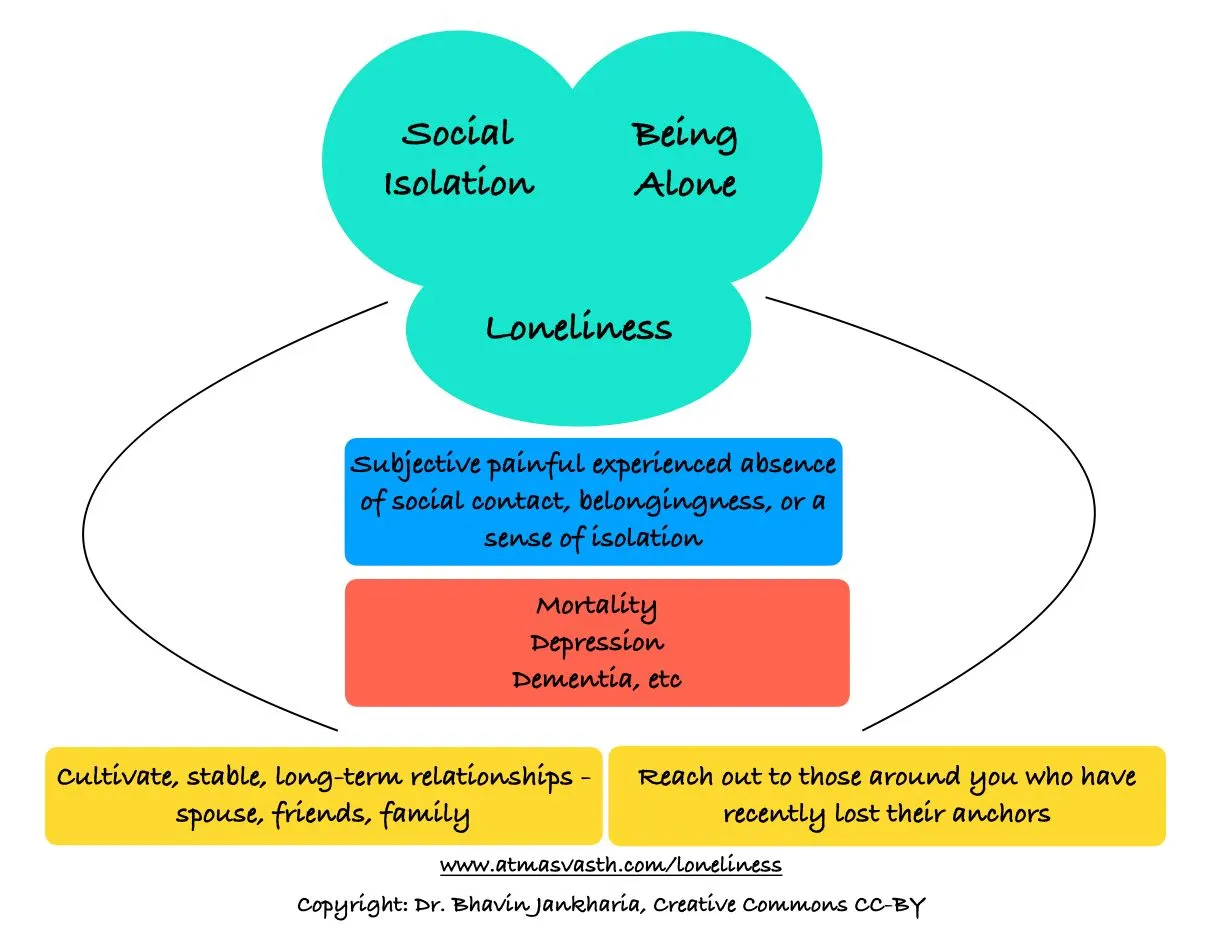
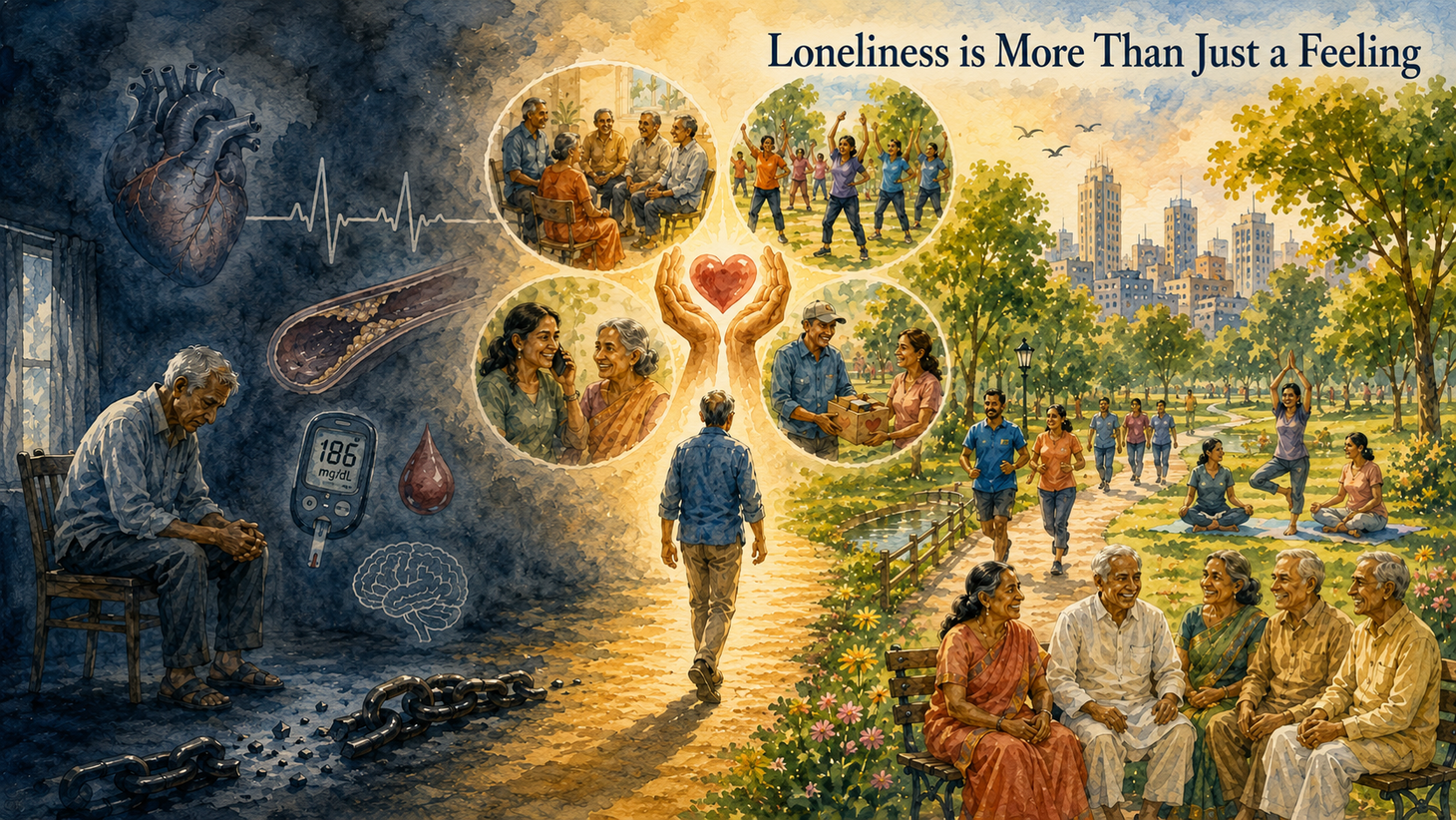
Loneliness affects the mind, the heart and the rest of the body. Anything we do to reduce loneliness for ourselves and those around us, is worth the effort.
Audio and YouTube versions available at the end of this email.
In the 15-point guide to live long, healthy, the 4th point is
4. Calm your mind and build cognitive reserves to prevent/delay cognitive decline/dementia - daily (meditation, downtime, learning, reading).
Maintain social connections - to prevent loneliness, which can accelerate cognitive decline.
This was based on my last piece of Mar 2022, at which time the focus was on the difference between being lonely and being alone and how loneliness accelerates cognitive decline and the onset of dementia.
Since then the Surgeon General of the United States of America has issued an advisory on loneliness, stating “Loneliness is far more than just a bad feeling—it harms both individual and societal health. It is associated with a greater risk of cardiovascular disease, dementia, stroke, depression, anxiety, and premature death. The mortality impact of being socially disconnected is similar to that caused by smoking up to 15 cigarettes a day, and even greater than that associated with obesity and physical inactivity.” [1].
The “15 cigarettes a day” analogy is likely a bit dramatic, but the WHO then jumped into the fray in 2025 with a document published by its Commission on Social Connection that says that 1 in 6 people worldwide are lonely, highest in low income countries, responsible for 8,70,000 deaths a year, the drivers being poor health, unhealthy use of digital technologies, life transitions, weak community structure, living alone, low income/education and marginalization [2].
The story is similar in India. A systematic review earlier this month [3] has found a loneliness prevalence ranging from 3.8% to 66.4%, settling on a possible number of around 27.6%, which is around 1 in 3-4 people. Another 2026 study [4] looked at the LASI cohort and found a 37% prevalence of loneliness in older adults, higher among migrants especially urban migrants.
But these studies only identify the scale of the problem, not the consequences and the solutions.
A recent multi-cohort study [5] looked at multiple ageing cohorts and among 81978 participants found that loneliness increased the risk of cardiometabolic disease. Using the 100 people in a room concept, if you had a room of 100 people who were not lonely, around 18 people would land up with one disease (stroke, diabetes, heart disease) over 5 years. In a room of 100 lonely people, that number would be around 22, four more people who would develop disease (one in 25 lonely people), stroke being the condition most tightly linked to loneliness. The lonely are also more likely to land up with a second or third disease.
Loneliness also affects our proteomic profile by causing elevation of proteins linked to cardiovascular disease, type 2 diabetes, stroke and mortality, found during a 14-year follow-up of 42,000 odd people from the UK biobank [6].
So accepting that loneliness not only affects our minds but also our bodies and is one of the many killers we have to deal with, what can we do to reduce social isolation. One study from Hong Kong [7] compared lonely people who volunteered, delivering mindfulness, behavioral activation or befriending interventions to other lonely people with lonely people who did not volunteer and found a one-third reduction in the loneliness of those who volunteered, the typical volunteer ending up less lonely than 2/3rds of those who did not volunteer.
So what does this mean for you and me?
We need to take whatever steps necessary to prevent both social isolation and loneliness in ourselves and in those around us. It is not easy, but there are some steps that may help.
For ourselves
- Join a new activity with a defined task and keep showing up.
- Don’t overthink that others are too busy for you…reach out to friends and family.
- Do your workouts and runs and walks and yoga, etc in groups.
- Go out…to parks, gardens, clubs, etc.
For those around us
- Make contact regular and purposeful…phone calls, video calls, visits…structured and timed.
- Find community centres to connect them to.
- Reduce practical barriers to moving around…transport, phones, etc.
- Watch the high-risk moments specifically…the recently widowed, the newly relocated and those living alone.
As the years go by, I will keep coming back to this as and when there is anything new to add.
Listening Options
Audio File
YouTube
Footnotes
1. https://www.hhs.gov/sites/default/files/surgeon-general-social-connection-advisory.pdf
2. https://www.who.int/groups/commission-on-social-connection/report/
3. Muralidharan N, Thiagesan R, Gopichandran V. Prevalence and determinants of social isolation and loneliness among the elderly in India: A systematic review. Indian J Med Res. 2026 Jul 1;164:63–71. doi:10.25259/IJMR_3300_2025
4. Muhammad T, Pai M, Rishad M, Murmu A, Afsal K, Ali WK. Associations between migrant status, social isolation, and loneliness among older adults in India. BMC Geriatr. 2026 Mar 16;26(1):568. doi:10.1186/s12877-026-07316-x
5. Wang DY, Xie L, Wu Q, Sun Y, Li J, Yuan L, et al. Loneliness, unhealthy lifestyle, and incident cardiometabolic disease among middle-aged and older adults across 33 countries: a multicohort study. European Journal of Preventive Cardiology. 2026 Jun 22;zwag330. doi:10.1093/eurjpc/zwag330
6. Shen C, Zhang R, Yu J, Sahakian BJ, Cheng W, Feng J. Plasma proteomic signatures of social isolation and loneliness associated with morbidity and mortality. Nat Hum Behav. 2025 Jan 3;9(3):569–83. doi:10.1038/s41562-024-02078-1
7. Yeung DYL, Jiang D, Warner LM, Choi NG, Ho RTH, Kwok JYY, et al. The effects of volunteering on loneliness among lonely older adults: the HEAL-HOA dual randomised controlled trial. The Lancet Healthy Longevity. 2025 Jan;6(1):100664. doi:10.1016/j.lanhl.2024.100664Atmasvasth Shop
 JPLLP
JPLLP
 JPLLP
JPLLP
The Detailed 15-Point Guide to Live Long, Healthy
 Bhavin Jankharia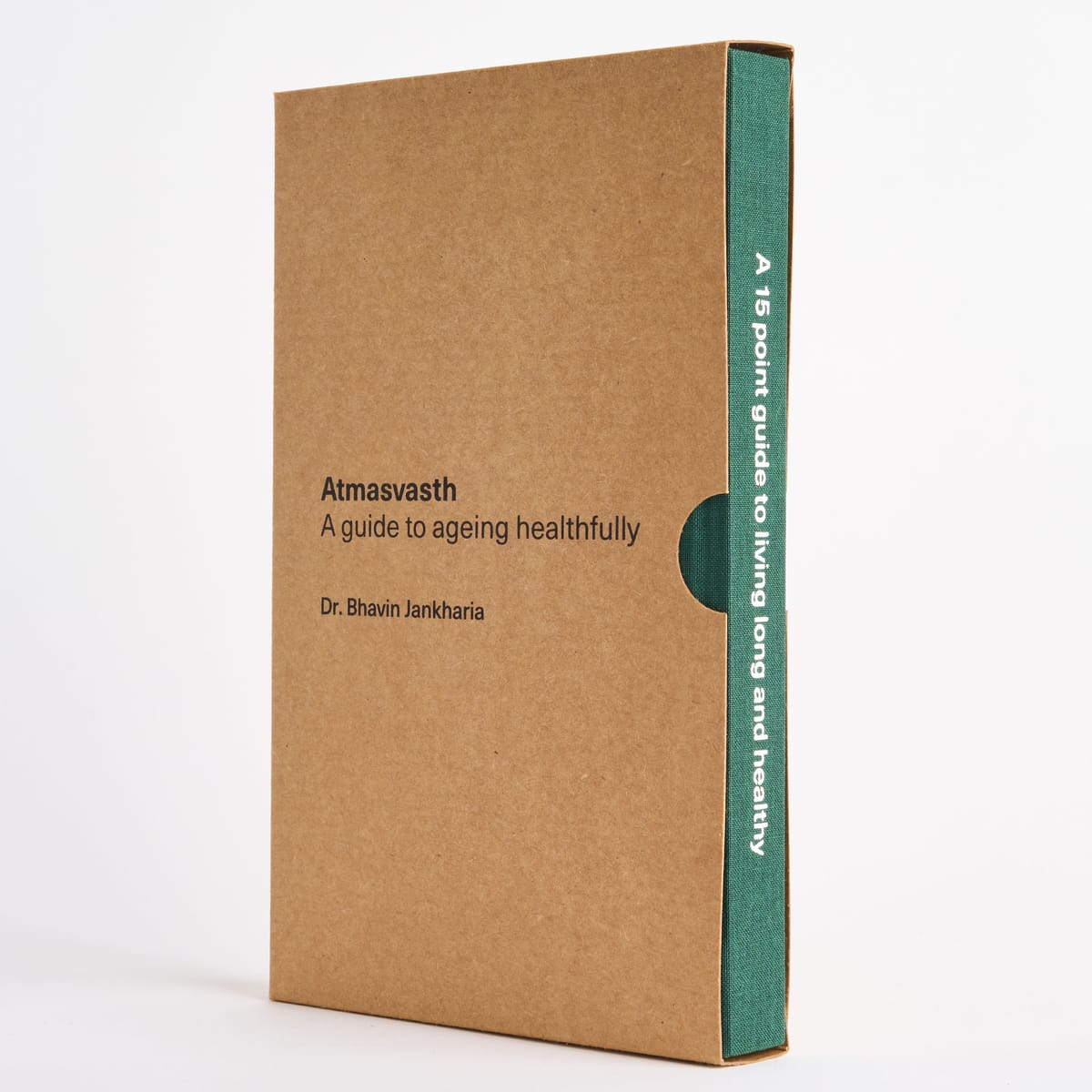
Atmasvasth Newsletter
Join the newsletter to receive the latest updates in your inbox.