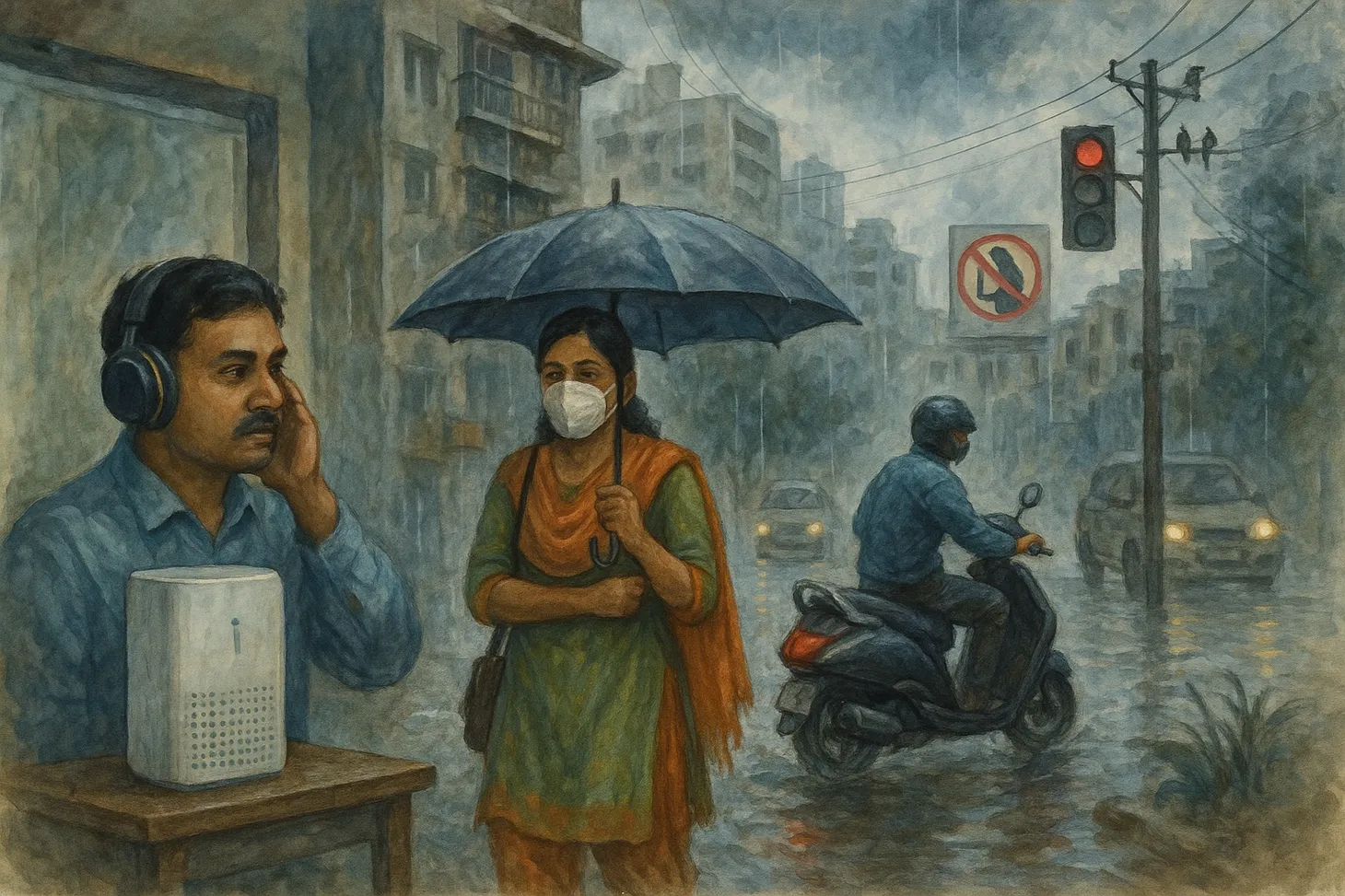
Heat: The Invisible Barrier to Long-Term Health and Longevity
As heatwaves increase, we have to be more and more careful of protecting ourselves to prevent damage to our body and organs, using any means possible, both short-term and long-term
The Book
 Bhavin Jankharia
The Detailed 15-Point Guide to Live Long, Healthy
Bhavin Jankharia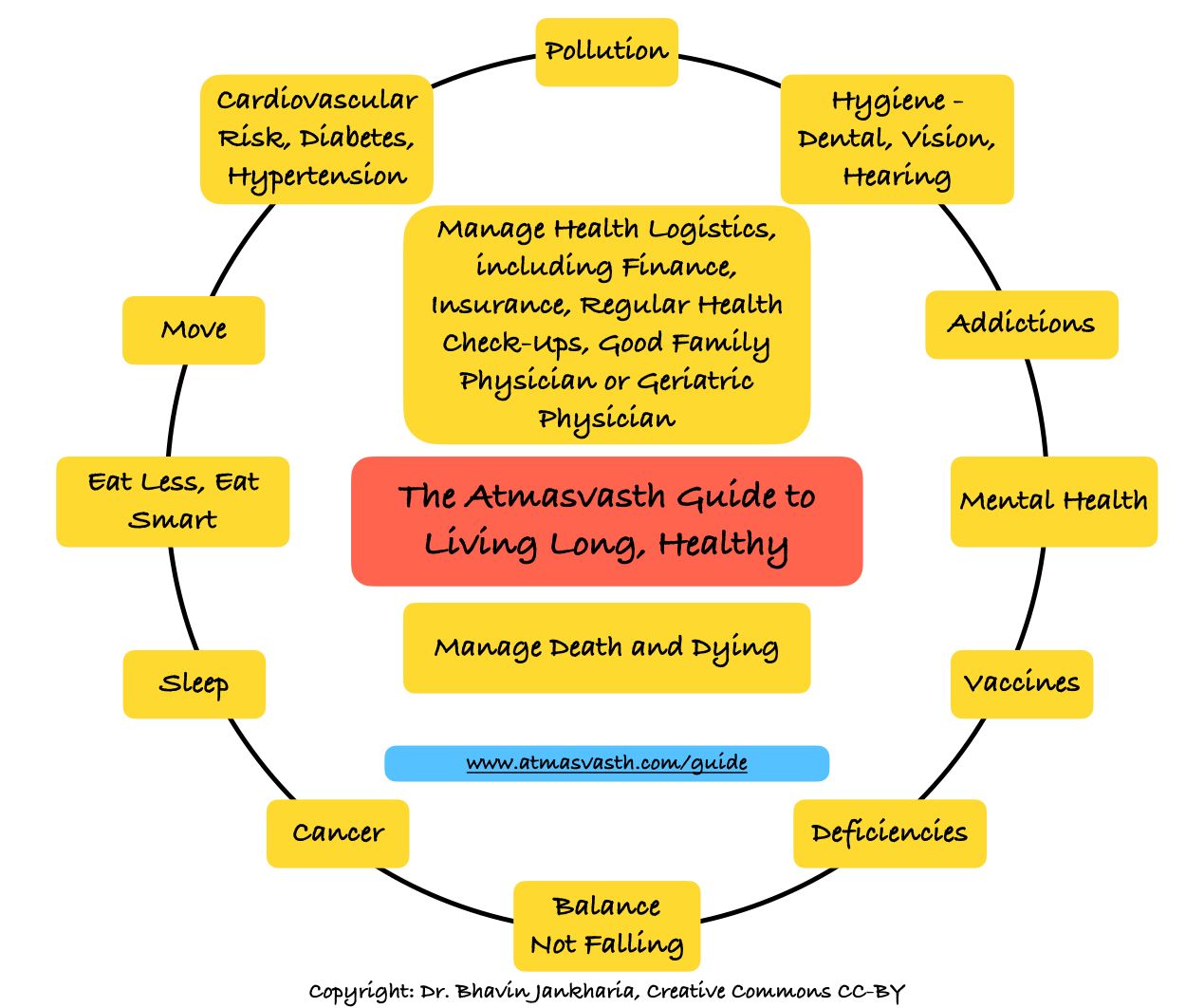
Audio
Soundcloud
You can listen to the audio/podcast hosted on Soundcloud by clicking the Play button below within the browser itself. You can click here to access directly from your email.
YouTube
A YouTube version of the audio is also now available here.
Text
The first point in the 15-point Atmasvasth Guide to live long healthy is to move. Physical activity is the cornerstone of everything we do to this end.
The 9th point is to address abnormal environmental exposures and stressors at a personal level, second sub-point of which is...
Avoid extremes of temperature exposure. Reduce exposure to extremes of heat and cold and protect yourself as best as possible in such environments.
 Bhavin Jankharia
In Apr 2024, I wrote about how we should be careful exercising in the heat, especially if the humidity and wet-bulb temperature (WBT) are high (above 23 C) and if the WBT goes above 27.9 C, then to just workout indoors.
 Bhavin Jankharia
Nothing in life works in isolation.
A few weeks ago, Lancet Glob Health published an article by Christian Garcia-Witulski and colleagues [1] that showed that for every additional month with a mean temperature > 27.8 deg C, the physical inactivity increased by 1.85 percentage points in low and middle income countries. In simpler terms, it means that 1,850 people who used to be active per 100,000 (1 lakh active people) stopped becoming active. At an individual level, it means that the effort to be active increases because it becomes more and more difficult to be outdoors when temperatures are high, if you don’t have access to air-conditioned facilities. This problem does not affect high income countries because they can move to cooler indoor locales and to that extent, the upper middle class and rich in countries like India would also not really have a problem, since they too can move to air-conditioned gyms.
However, this is a relevant public health problem because many of those who don’t have a plan B will just stop moving.
In parallel, a recent article from the US by James Healy and colleagues [2] has documented that even in the US, among those over 65 years of age, every additional heat wave caused an additional 8.83 deaths per 100,000 (1 lakh) people by straining the body until existing conditions, such as cardiovascular disease, respiratory disease or neurological problems became fatal. There was a similar article in India [3] that “suggests that during heatwaves there is a 14.7% increase in mortality with about 1100 deaths per year attributable to extreme heat, which again as with all data in India, is likely an under-reported number.” For example, Heatwatch in Aug 2025 reported 84 suspected heat-stroke related deaths from late Feb to July while the National Centre for Disease Control (NCDC) said that India had 7192 suspected heatstroke cases and only 14 confirmed deaths, an under-reporting or mismatch of a factor of 6.
The correlation between rising heat and deaths especially cardiovascular deaths is not linear, but exponential...beyond a certain temperature (which would be different for different areas), the deaths due to cardiovascular risk increase significantly, as this paper from China shows [4].
Both the paper by Healy et al [2] and the one by Yu et al [4] emphasize the importance of nighttime heat as a critical factor...when the night also stays hot, the body does not get a “rest” from the strain of the daytime heat.
I talked about biological ageing as against chronological ageing in last week’s piece on multivitamin supplements and why we need to be careful about the data from multivitamin supplements slowing down biological ageing. However, heatwaves are estimated to significantly accelerate biological ageing, as another paper from Taiwan and China shows [5]. Each heatwave sped up ageing by 0.13 to 0.17 years, affecting men more than women and those over 65-years of age more than younger people and those with pre-existing disease more than those without.
 Bhavin Jankharia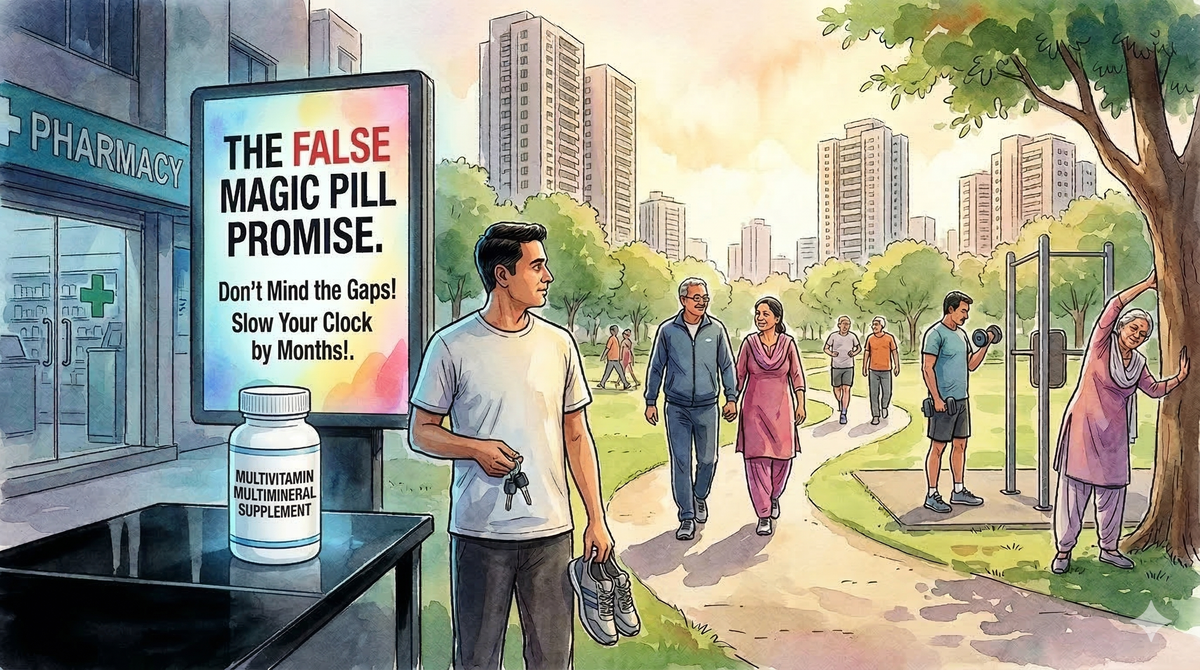
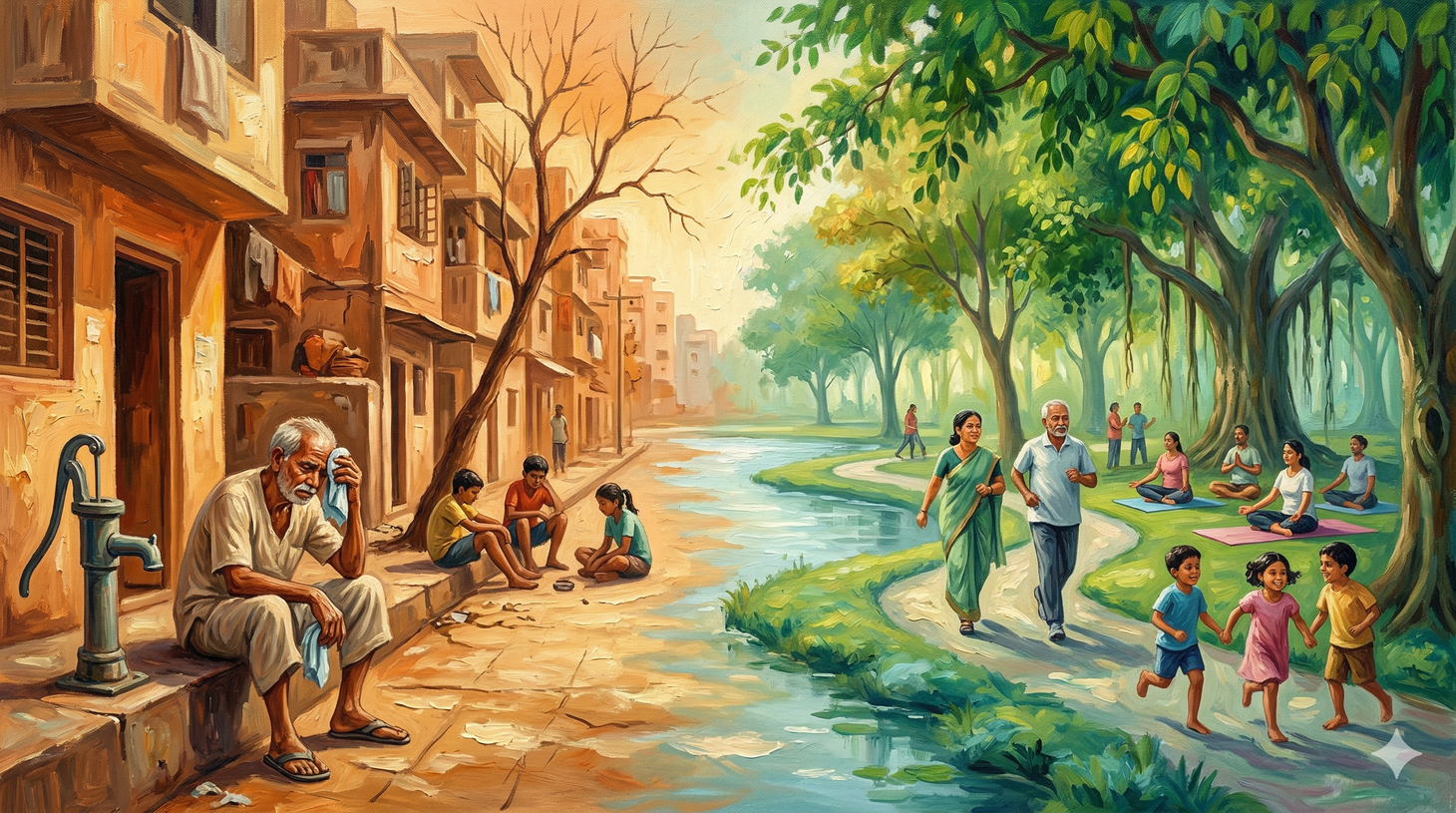
But this risk can be reduced with increased greenness as a recent article from Australia headed by Yao Wu [6] shows. The more the green cover, the more is the likelihood of protection from death due to heatwaves.
What does the mean for you and me?
You have to protect yourself from the heat.
We were recently at a wedding where the varmala was at 3 PM with the sun directly above us and even though there were coolers and small umbrellas, most of us could feel the heat...just that exposure of an hour was enough to tire me and I recovered only after sleeping it off for over an hour and resting in an air-conditioned room. These scenarios can be easily avoided with adequate planning and if the muhurat still dictates exposure to extreme heat, then the elderly and those with pre-existing heart disease, etc, should be kept indoors in cooler environs.
In short, all this means reducing exposure to heat, using any means to cool your surroundings, both in the short-term with air-coolers and air-conditioners and in the long-term by increasing to the extent possible the greenery around you, or moving to greener or cooler locales.

Heat reduces the ability to be physically active outdoors, which means it is important to move to indoor, cooler spaces or to air-conditioned gyms to continue to be physically active and to not stop.
Footnotes
- García-Witulski C, Rabassa M, Melo O, Sarmiento JH. Effects of climate change on physical inactivity: a panel data study across 156 countries from 2000 to 2022. The Lancet Global Health. 2026 Apr;14(4):e500–11. doi:10.1016/S2214-109X(25)00472-3
- Healy JP, Castro E, Danesh Yazdi M, Rice MB, Chang H, Steenland K, et al. Heat waves and annual mortality among older adults (aged ≥65 years) in the USA. The Lancet Planetary Health. 2026 Feb;10(2):101432. doi:10.1016/j.lanplh.2026.101432
- De Bont J, Nori-Sarma A, Stafoggia M, Banerjee T, Ingole V, Jaganathan S, et al. Impact of heatwaves on all-cause mortality in India: A comprehensive multi-city study. Environment International. 2024 Feb;184:108461. doi:10.1016/j.envint.2024.108461
- Yu X, Liu J, Yin P, Gao Y, He C, Kan H, et al. Nonlinear Relation Between Cardiac Mortality and Excess Temperature in Heatwaves. Journal of the American College of Cardiology. 2025 Apr;85(13):1403–16. doi:10.1016/j.jacc.2025.01.034
- Chen S, Liu Y, Yi Y, Zheng Y, Yang J, Li T, et al. Long-term impacts of heatwaves on accelerated ageing. Nat Clim Chang. 2025 Sep;15(9):1000–7. doi:10.1038/s41558-025-02407-w
- Wu Y, Wen B, Ye T, Huang W, Liu Y, Gasparrini A, et al. Estimating the urban heat-related mortality burden due to greenness: a global modelling study. The Lancet Planetary Health. 2025 Jul;9(7):101235. doi:10.1016/S2542-5196(25)00062-2
Atmasvasth Newsletter
Join the newsletter to receive the latest updates in your inbox.