Close As Many Doors As You Can
There is no magic pill. It's everything, a little, every day, that keeps us well.

Audio and YouTube versions available at the end of this email.
The reason I have a 15-point Atmasvasth guide to live long, healthy, put together as I discover for myself what to do and not do and not just a one or two-point guide, is because it all matters together. There is no single magic pill that can turn your life around, and no amount of foo-foo healthcare will suddenly make you healthier or extend your healthspan or lifespan. So, while physical activity is perhaps the single most important point of them all, if you become deaf and can’t hear and refuse to get that taken care of, you will suffer, cause those around you to suffer and a few years will be lopped off your healthspan.
There are many centres across the world that have now started offering whole body MRIs to detect disease, mainly cancer before the disease becomes symptomatic. There are also blood tests that are being touted as the ultimate in cancer detection. Apart from the fallacy that detecting cancer early before it becomes symptomatic actually saves lives (because you wouldn’t know if that cancer was the one that was actually going to grow and kill you in the first place and the downstream effects of biopsy, surgery and chemotherapy and radiotherapy do reduce your lifespan), the treatment options have improved to such an extent that today for a large number of cancers, picking them up when they cause symptoms is perhaps as good as diagnosing them on screening, with a few exceptions.
Last week, a writer I follow, dynomight wrote a math-heavy essay about the issues with assuming that you can increase longevity [1]. He quoted Keyfitz who ran an experiment in 1977, who calculated that if all cancer were to be eradicated from this world, it would at best increase the average lifespan by 2-3 years (in the United States). This is not to discount the pain and suffering that people with cancer go through from diagnosis to treatment…but this is borne out by the lung cancer screening studies, all of which, barring one, reduce mortality from lung cancer, but not all-cause mortality…because if you don’t die of cancer, then you become available to die of a heart attack, and if not that, then something else. If one door closes, another door opens.
The caveat here is this theory applies to the Western world and the higher socio-economic strata of Indian society, which you belong to, if you are reading this, where the average life span is now over 80 years. In the lower socio-economic strata where the average lifespan can vary from 45 years in tribal communities to 60 years in slums (40.3 years in Deonar and 46.9 years in Dharavi in 2015 as against 73.6 years in Breach Candy if you take Mumbai as an example…you can see the graph in my piece titled Avoiding Monsoon Maladies), finding and treating tuberculosis, high blood pressure, high blood sugar and high lipid levels are real interventions that will improve their lifespan to over 70-75 years. The logic in this piece is not about that population where anything done to diagnose and treat common diseases makes a big difference.
So coming back to the people who will live beyond 80 as a rule… irrespective of what you read about centenarians and blue zones, many of which are artifacts of miscalculation of birth-dates, the vast majority of us will start dying from the age of 80-85 onwards and a small percentage will reach 95 to 100. When I wrote “Ordained to Live, Destined to Age”, I wrote about intrinsic and extrinsic factors that affect our longevity and health. At some point our bodies will start deteriorating, no matter what we do…when that happens is determined by genetics and modified by the environment and then the diseases you land up with. If you close the door of cancer death, then the door of heart disease opens up to kill you and if that door closes, you might land up with dementia and so on and so forth. As Dhruv Khullar in his recent New Yorker piece says “society prepares the lifespan, the individual lives it”, which chimes with Orgel’s second rule that “evolution is cleverer than you are”.
This may sound very depressing, because it almost means that whatever you do, in the end you will die, but that is something we need to accept. I first quoted this poem in my piece “The Inevitability and Certainty of Death”
If you are born, you will die.
From too much love of living,
From hope and fear set free,
We thank with brief thanksgiving
Whatever gods may be
That no life lives for ever;
That dead men rise up never;
That even the weariest river
Winds somewhere safe to sea.
The Garden of Proserpine by Algernon Charles Swinburne
The question then really is what can we do to make sure that we are as healthy as possible up to the time of our death? And that is where the concept of the 15-point guide comes in. Not just one or two or three, but everything in totality. Different factors differ in their relative importance, but they are all important to some extent or the other. You may run and lift weights till you are 85, but if you have bad gums or teeth or become blind or land up being lonely or continue to drink, those will eventually negate the benefits of working out. And so on and so forth.
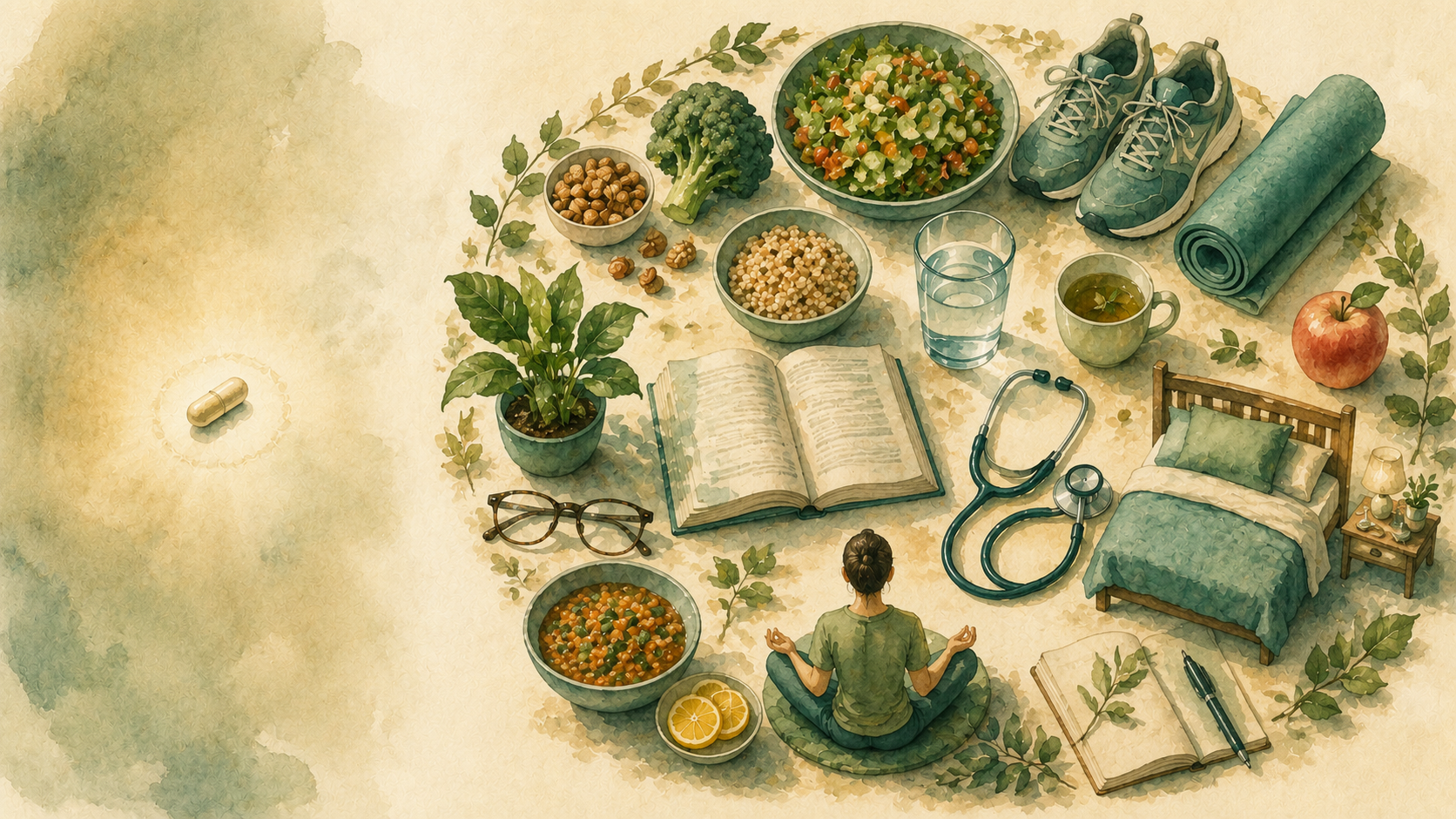
The idea then is to try and close as many doors as possible so that the extrinsic factors are reduced to the full extent possible, while slowing down the intrinsic factors that are causing our bodies and minds to deteriorate until we reach an ordained end that none of us can escape. If we accept that we are going to die at some point, it becomes easier to plan for a good, fun healthspan within that lifespan.
To reiterate. There is no single thing, no magic pill, no shortcut to an increased healthspan. It is everything put together that matters.
Listening Options
Audio File
YouTube
Footnotes
1. https://dynomight.net/hazard-ratios/
2. Keyfitz N. What difference would it make if cancer were eradicated? An examination of the Taeuber paradox. Demography. 1977 Nov;14(4):411-8. PMID: 913728.
Atmasvasth Shop
 JPLLP
JPLLP
 JPLLP
JPLLP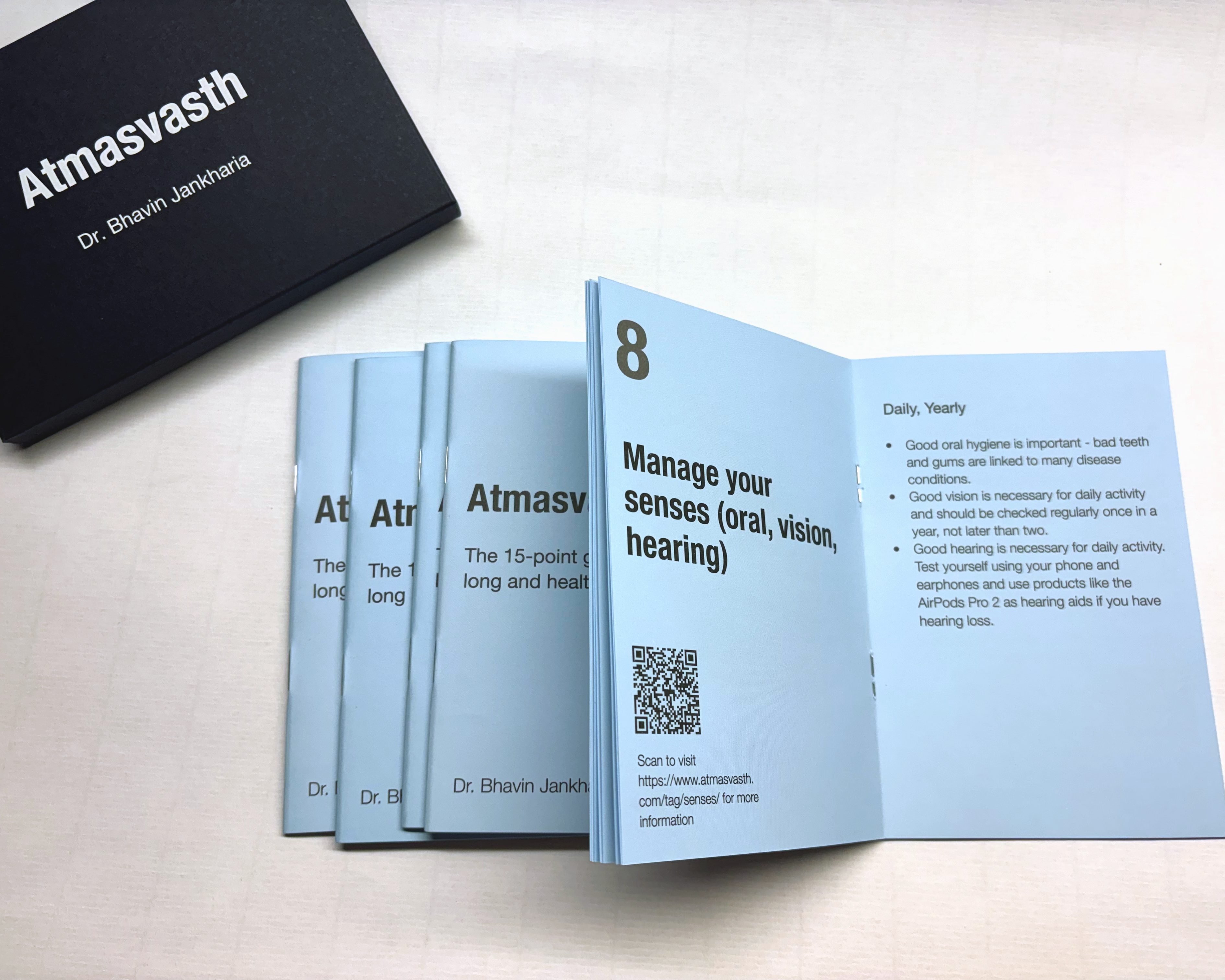
The Detailed 15-Point Guide to Live Long, Healthy
 Bhavin Jankharia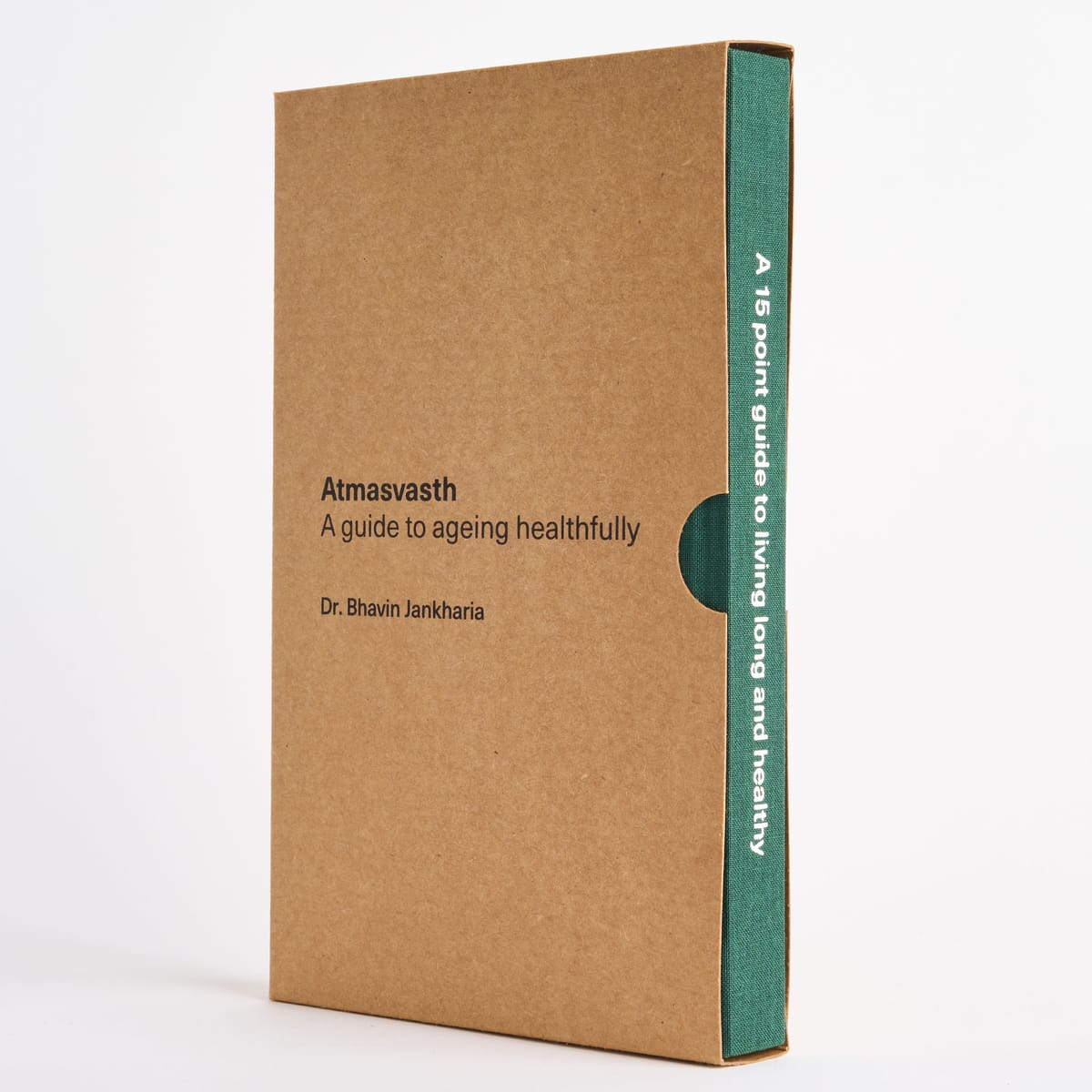
Atmasvasth Newsletter
Join the newsletter to receive the latest updates in your inbox.