The Strength of Resistance Training
Resistance training should be an important part of our physical activity routine. Along with walking and running, resistance training helps us live long, healthy in multiple ways.
The Book
 Bhavin Jankharia
The Detailed 15-Point Guide to Live Long, Healthy
Bhavin Jankharia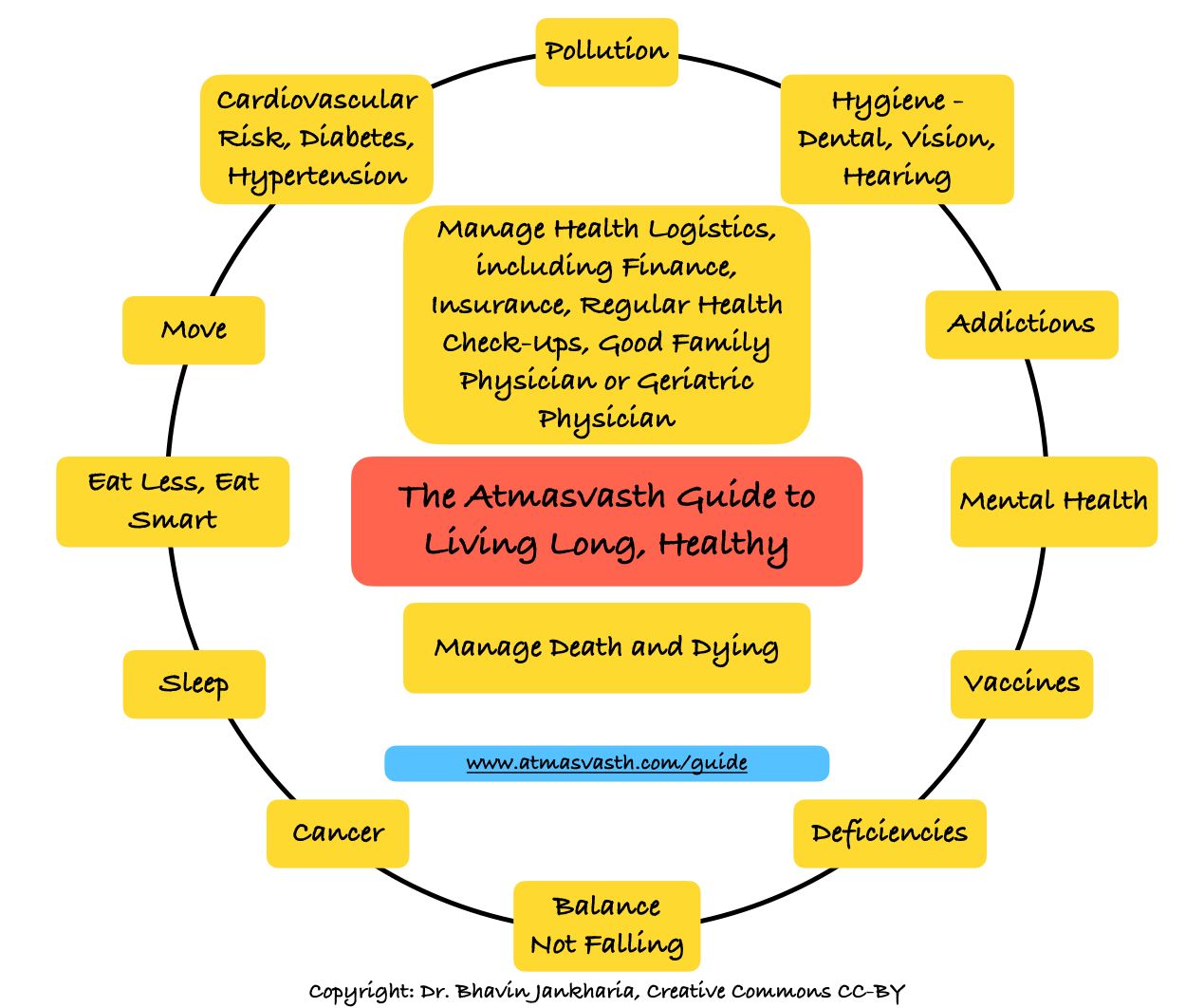
Audio
Soundcloud
YouTube
A YouTube version of the audio is also now available here.
Text
In the 15-point guide, the first and most important point is
1. Move - be physically active - daily
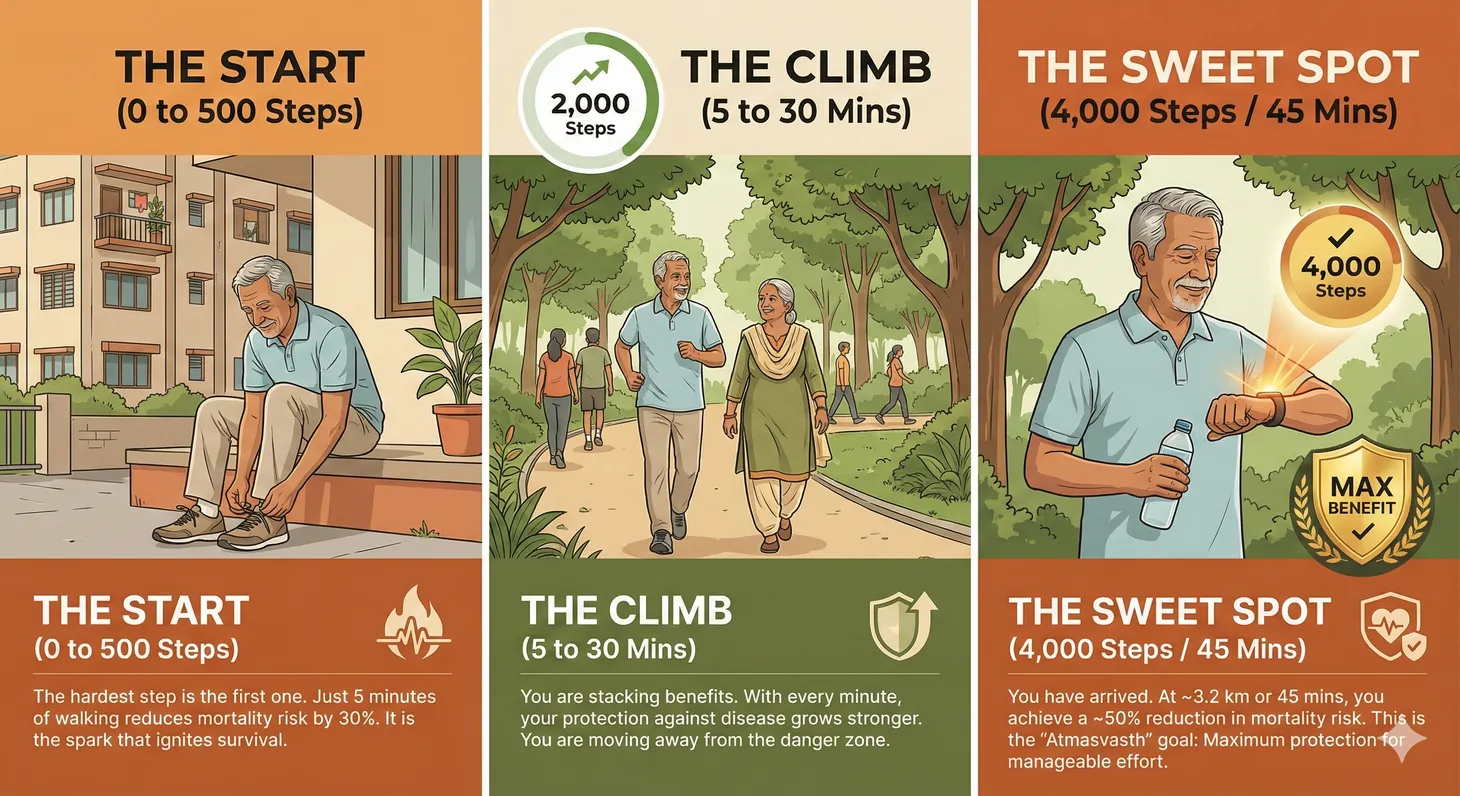
- At least 30-45 minutes of moderate to brisk walking every day, 6 days a week. Anything more is better. If you are able to, then running works wonders and is NOT associated with injury or harm. Being active over the weekends is equivalent to workout out evenly during the week.
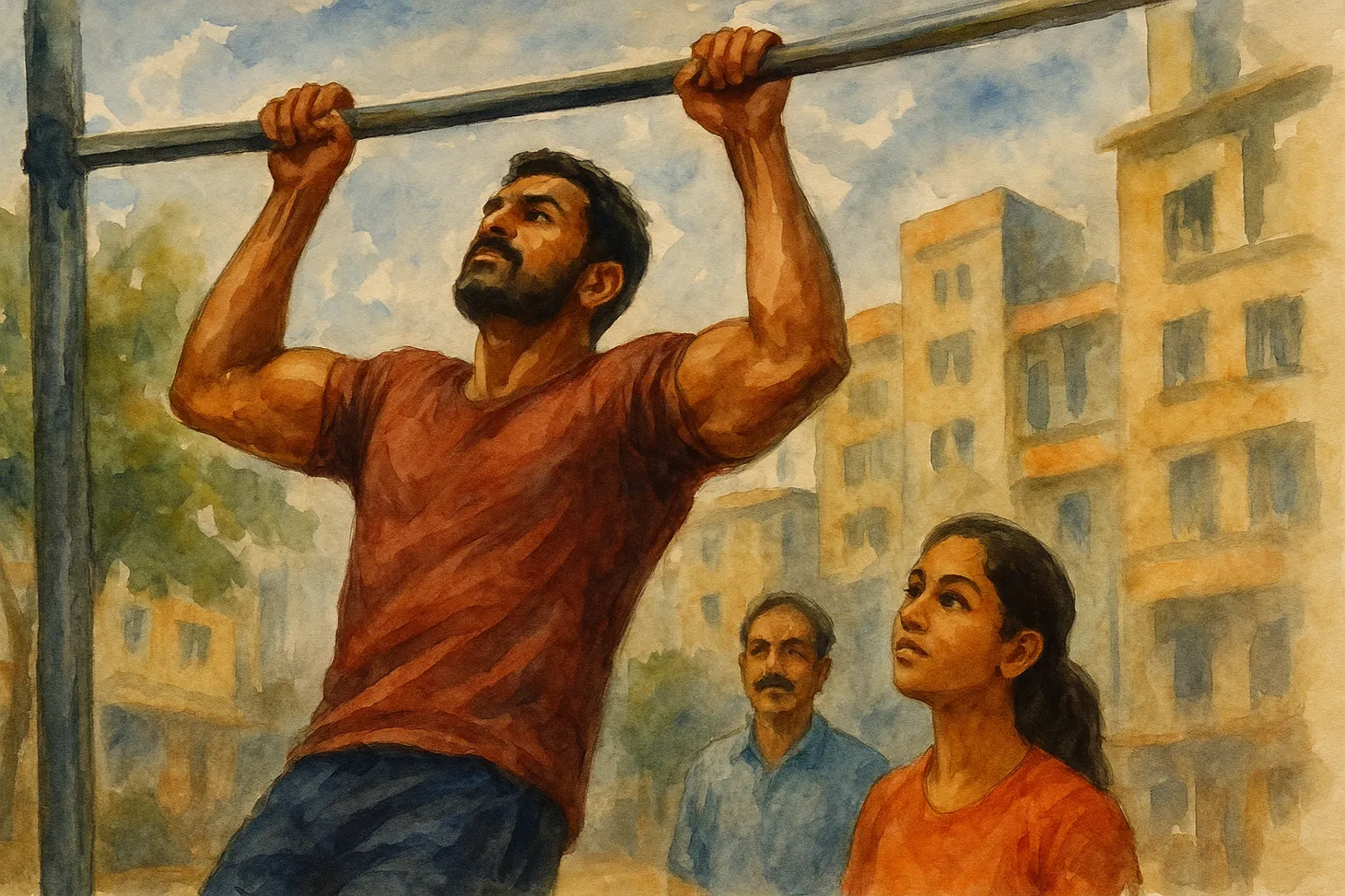
- Add strength training, including pull-ups.
- Add yoga or tai-chi or similar exercises to improve balance.
- Use stairs instead of lifts and add short bursts of brisk walking as part of your daily routine.
- If you are already active, then improve your cardiorespiratory fitness (CRF) to the appropriate level for your age by increasing the level / amount of your physical activity. You can measure your CRF using your tracking device (Apple Watch, etc) or with a treadmill stress test.
- Remember, every move counts and any activity is better than none.
Somehow I thought that I had written enough about strength training, but it turns out that the only piece I had written was as part of an update in Jul 2022, where I quoted an article [1] saying that combined training (aerobic and strength/resistance on different days) is better than either alone or on the same day.
When I did my piece titled The Pull-Up and the one on sarcopenia, where resistance training is an important intervention to prevent/reverse muscle loss, I realized that I had not written about the benefits of strength/resistance training in any great detail, so here goes a Q & A. There is additional information on Wikipedia if you want to explore this topic more.
1. What is strength/resistance training? (I will use resistance training (RT) from now on as the descriptive term).
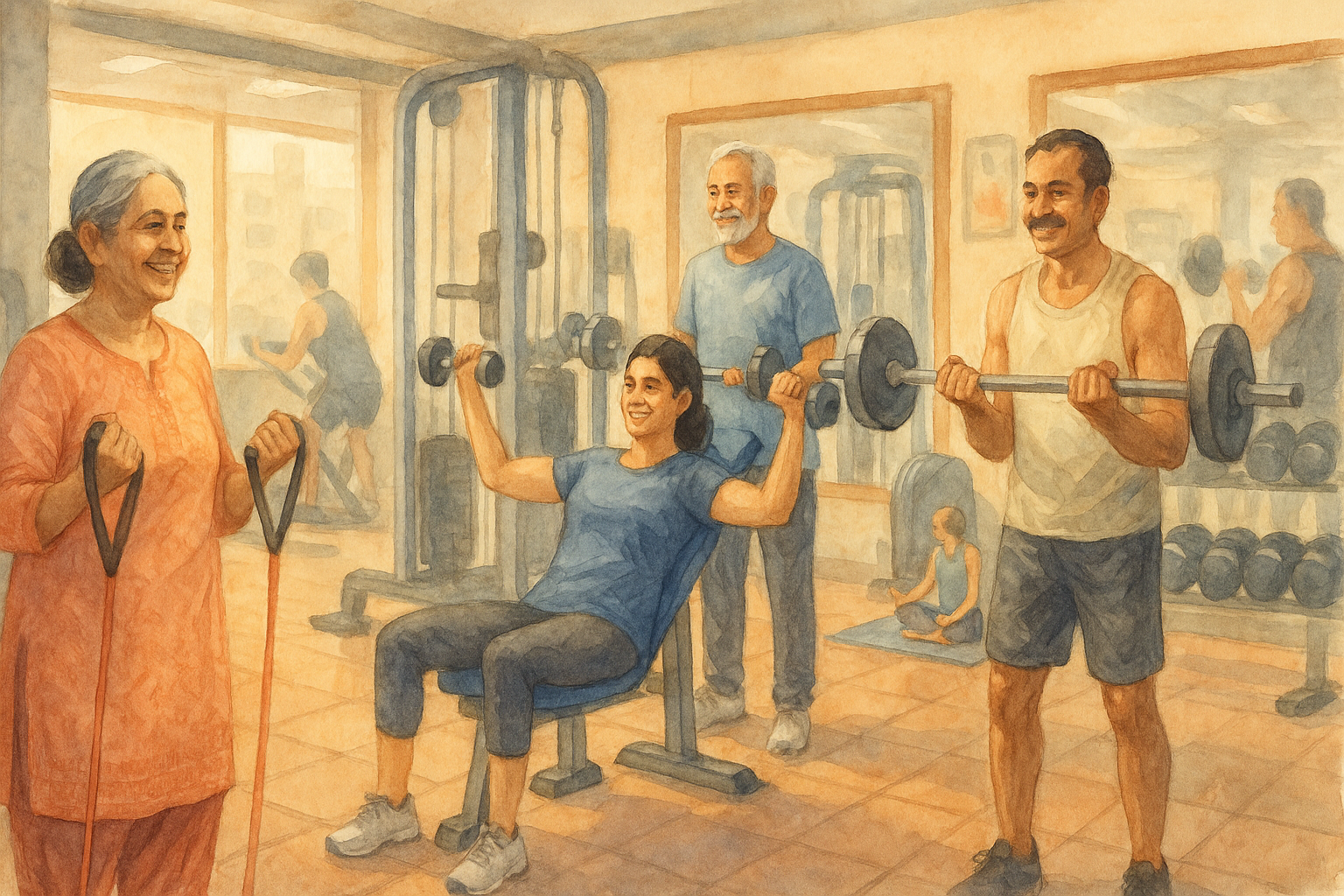
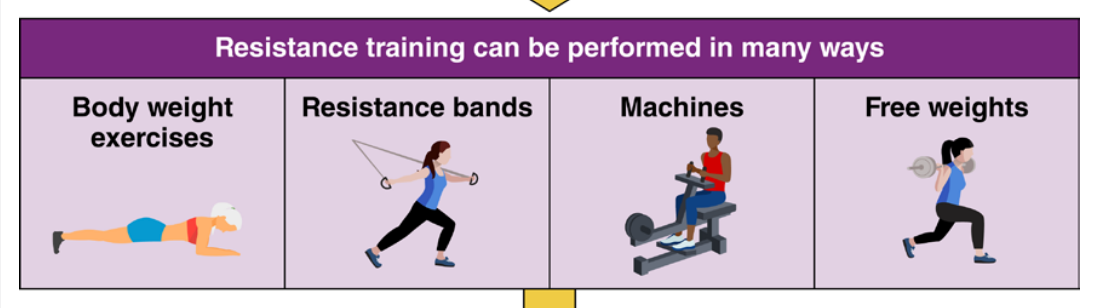
Resistance training is an exercise requiring muscle contraction against an external resistance or the body’s own weight to increase muscle mass and strength [2]. This includes exercises performed against our own body weight such as pull-ups, push-ups, or against gravity and bands, barbells or dumbbells (image from ref 3).
2. What are the benefits of RT?
A. Increased healthspan and lifespan
There is an approx 15% reduced risk of all-cause mortality and 17% reduced risk of cardiovascular disease, compared to those who don’t do RT [3]. In addition, RT helps with reduction of blood pressure, improved fasting blood sugar and reduced lipid levels along with a beneficial effect on lean body mass and fat.
B. Prevention of/delayed sarcopenia / reduced falls
Those who do lifelong RT (or over long periods of time) have significantly reduced age-related decline of physical function and muscle mass [4]. Even in those where muscle has already started wasting due to disuse or has significantly undergone strength loss, RT helps with bringing back some function and improvement.
Interestingly, after 1 year of vigorous RT, a longer-term follow-up of the Danish LISA group showed beneficial effects on muscle strength up to 4 years [5].
C. Improved cognition
I will add to this in future posts.
3. How much RT is beneficial?
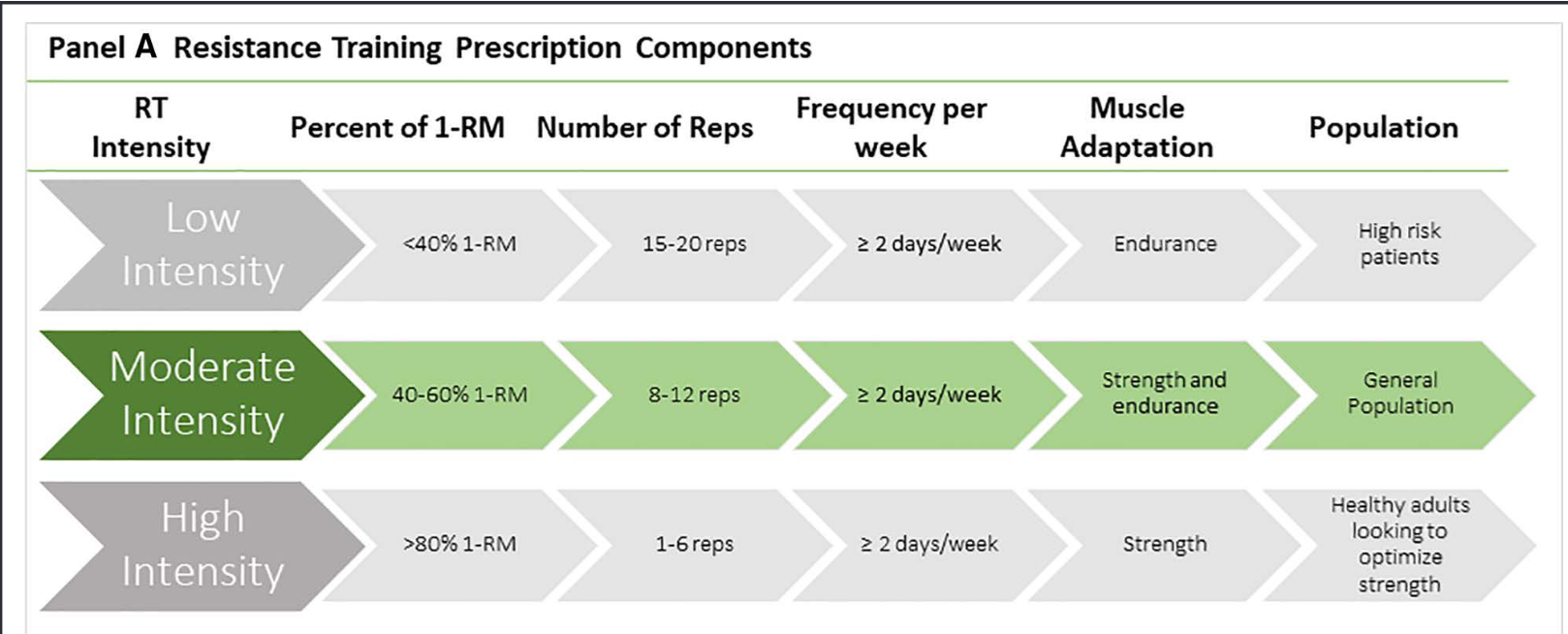
It is important to understand the concept of 1-RM. The maximum that a person can lift once is 1-RM. e.g. if you are doing a one-limb biceps curl standing, the maximum weight, say 20 kg you can curl just once is your 1-RM. 50% of that is 10 kg, which if you curl for 12 reps per set, then that is moderate intensity, whereas if you curl 16 kg for 3-6 reps, then that is high intensity (image from ref 3).
4. How should I do RT? Alone, using apps or with a trainer?
A recent study by Gavanda and colleagues [6] addressed this and found that the best is in-person supervised training. Direct supervision improves accountability and consistency with reduced drop-outs and injuries and better graded increase in weights and reps.
5. Which exercises should I do?
This image from reference 3 summarizes the major muscle groups that need to be worked upon at least 1-2 times a week.
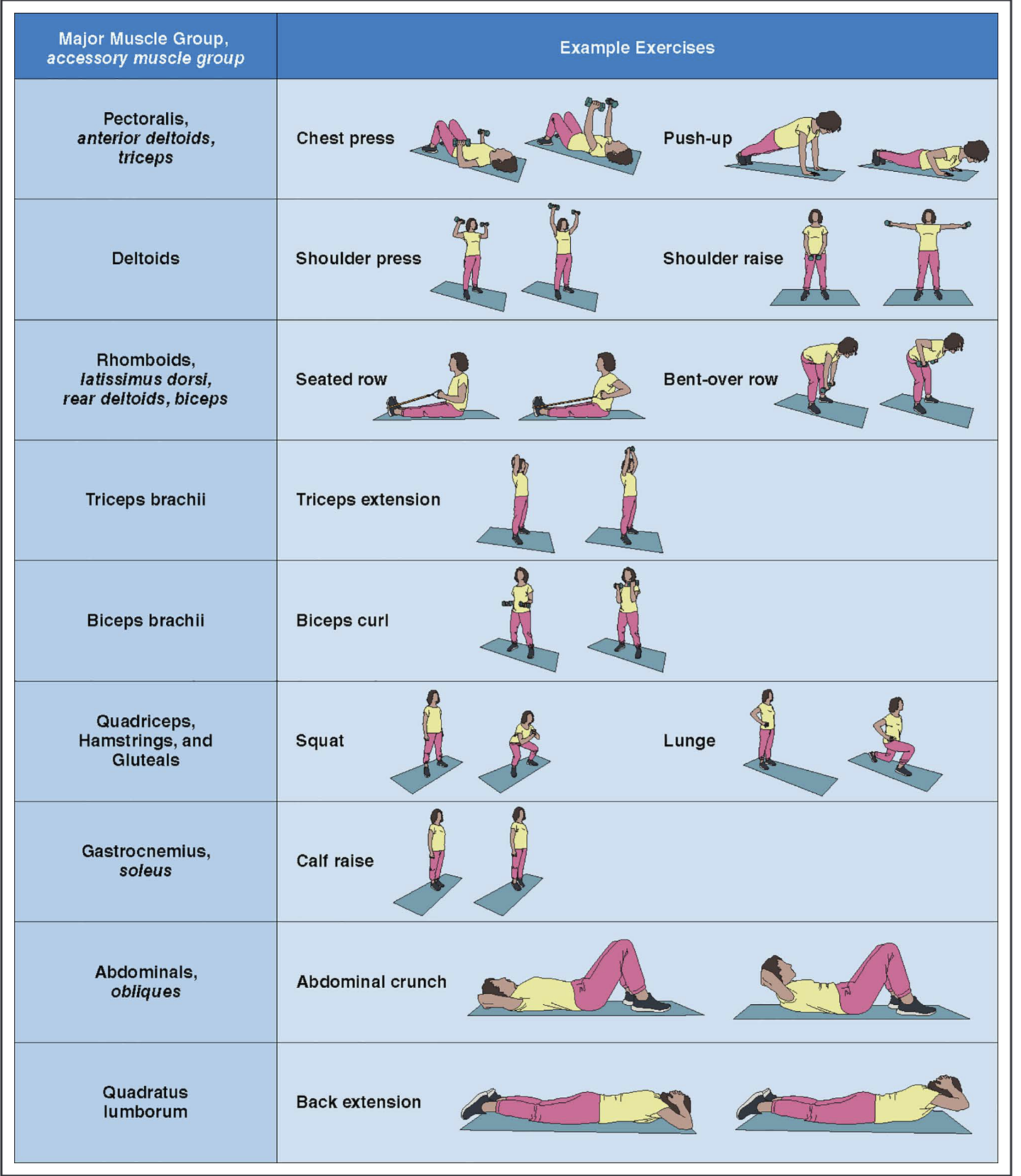
While a lot of these we can do on our own, especially the body weight exercises and perhaps those with resistance and loop bands, when we use weights and machines, it is always a good idea to do these under supervision. When I travel and use hotel gyms, sometimes there is no attendant in the gym and I reduce my weights and reps by at least 25-30%, given the unfamiliar environment, to avoid injury.
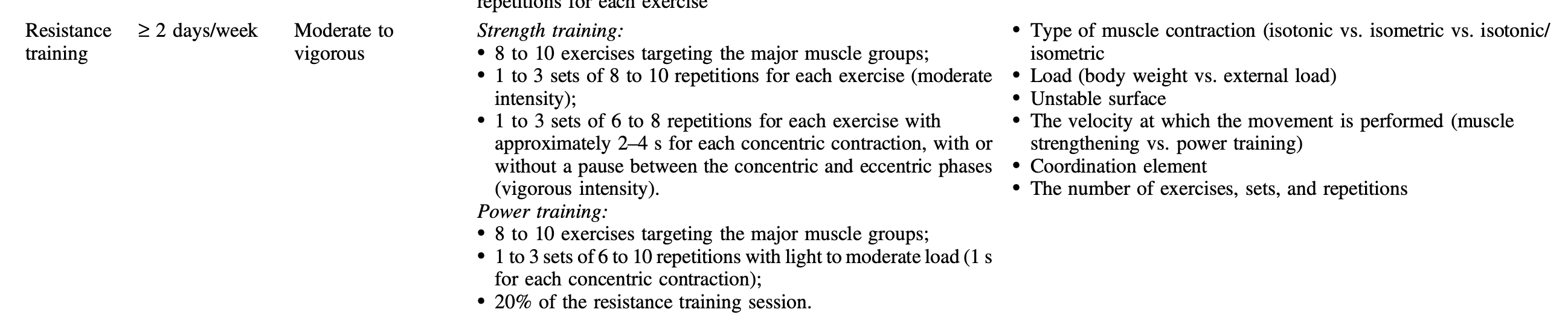
This is one set of recommendations for physical therapists and trainers for older people under them [7].
So what does this mean for you and I?
Physical activity is the cornerstone of our atmasvasth quest to live long, healthy.
The best aerobic exercise is brisk walking for 30-45 minutes a day. Anything more including running is even better.
Resistance training, using body weight, machines, dumbbells, barbells or bands, targeting all muscle groups, is needed to build and maintain muscles, preferably supervised, at least twice a week.
Compound training, i.e walking/running and resistance training on different days is the best combination.
Atmasvasth Newsletter
Join the newsletter to receive the latest updates in your inbox.